

Mig Welders

Pay in 3 interest-free payments on purchases from £20-£3000 with  . Learn more.
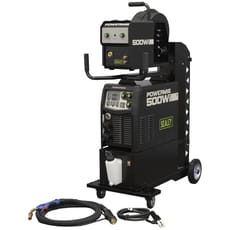
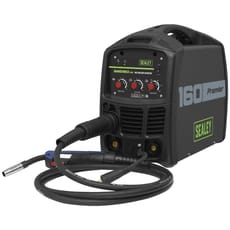
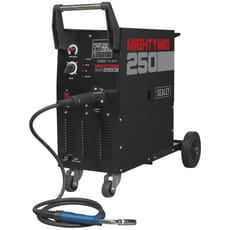
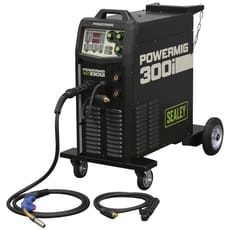
 Loading...
End of content
Error - No more pages to load
About Mig Welders
MIG welding, or Metal Inert Gas welding, represents one of the most accessible and versatile welding processes available to both professional tradespeople and DIY enthusiasts. A MIG welder uses a continuous solid wire electrode fed through a welding gun, combined with a shielding gas (or flux-cored wire for gasless operation) to create strong, clean welds on various metals including mild steel, stainless steel, and aluminium. This semi-automatic process makes MIG welding faster and more user-friendly than traditional stick welding, whilst still delivering professional-quality results across fabrication, automotive repair, and general metalworking applications.
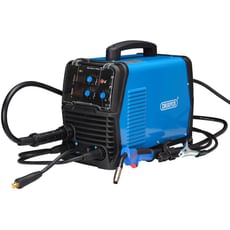
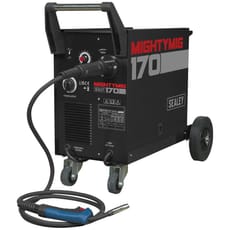
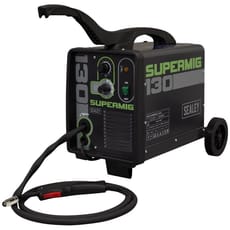
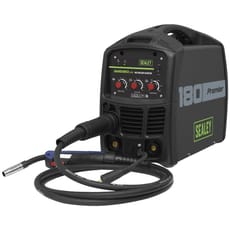
The selection at Tooled-Up.com includes inverter MIG welders from trusted brands like Sealey and Draper, offering amperage outputs from compact 100A models suitable for light fabrication work through to robust 260A machines capable of tackling heavy-duty industrial applications. Many models feature multi-process capabilities, combining MIG, TIG, and MMA welding functions in a single unit, providing exceptional value and versatility for workshops with varied welding requirements. Whether you're a mobile welder requiring a portable inverter unit or a fabrication shop needing reliable production equipment, the range caters to all skill levels and budgets.
Modern inverter technology has revolutionised MIG welding equipment, making these machines lighter, more energy-efficient, and significantly more affordable than traditional transformer-based welders. Gas/gasless capability offers flexibility to work both in controlled workshop environments and on outdoor sites where gas bottles may be impractical. Features like digital displays, synergic controls, IGBT inverter technology, and advanced arc stability systems help beginners achieve consistent results whilst enabling professionals to maximise productivity. Most domestic models operate from standard 240v UK mains sockets, making professional welding accessible for home workshops and small businesses.
Jargon Buster
- Inverter Technology: Modern electrical circuitry that converts 240v mains power to welding current more efficiently than traditional transformers, resulting in lighter, more portable machines with better arc characteristics and reduced running costs.
- Duty Cycle: The percentage of a 10-minute period that a welder can operate at a given amperage before needing to cool down. For example, a 60% duty cycle at 150A means the machine can weld for 6 minutes before requiring 4 minutes rest.
- Gas/Gasless (Flux-Cored): Gas welding uses separate shielding gas (typically Argon/CO2 mix) for cleaner welds, whilst gasless welding employs special flux-cored wire that generates its own shielding, ideal for outdoor work where wind can disperse gas.
- Synergic Control: An intelligent system that automatically adjusts voltage and wire feed speed when you select the material thickness and wire diameter, simplifying setup for beginners whilst ensuring optimal weld parameters.
- IGBT (Insulated Gate Bipolar Transistor): Advanced semiconductor technology used in modern inverter welders for superior switching speed, improved efficiency, and better arc stability compared to older MOSFET designs.
- Multi-Process Welder: A versatile machine combining MIG, TIG (Tungsten Inert Gas), and MMA (Manual Metal Arc/stick) welding capabilities in one unit, eliminating the need for separate equipment for different welding processes.
Who Uses Mig Welders?
MIG welders serve a diverse range of users across professional trades and domestic applications:
- Fabrication Engineers: Creating structural steelwork, architectural metalwork, and custom fabrications in workshops and on construction sites
- Automotive Technicians: Bodywork repairs, chassis modifications, exhaust systems, and restoration work on classic and modern vehicles
- Agricultural Engineers: Repairing farm machinery, trailers, gates, and agricultural equipment often in outdoor field conditions
- Maintenance Fitters: General repairs and modifications in manufacturing facilities, warehouses, and industrial plants
- General Builders: Installing steel beams, structural repairs, and site fabrication work requiring quick, reliable welding
- Mobile Welding Services: Tradespeople providing on-site welding requiring portable, reliable inverter equipment
- Engineering Students: Learning welding techniques and practising fundamental metalworking skills
- DIY Enthusiasts: Home workshop projects, garden furniture, gates, trailer repairs, and automotive restoration hobbies
- Classic Car Restorers: Panel repairs, chassis work, and fabrication for vehicle renovation projects
- Motorsport Teams: Roll cage fabrication, chassis modifications, and race car preparation
How to Choose the Right Mig Welders
Amperage Output and Material Thickness
The welder's maximum amperage determines the thickness of material you can effectively weld. As a general guide, 100-130A models suit materials up to 6mm thick, 150-160A machines handle up to 8mm, whilst 180-200A welders tackle 10mm steel. For heavy fabrication exceeding 10mm, consider 230A+ models. Always leave headroom above your typical requirements to avoid running machines at maximum capacity continuously.
Power Supply and Portability
Most domestic and light industrial MIG welders operate from standard UK 240v 13A household sockets, making them accessible for home workshops. Check the duty cycle at your intended working amperage – professional use demands higher duty cycles (60-80%) than occasional DIY work (20-40%). Inverter models offer superior portability compared to older transformer units, with many weighing under 15kg for easy transport to site work.
Gas or Gasless Operation
Gas-shielded MIG produces cleaner, stronger welds with less spatter, ideal for workshop environments and quality-critical applications. However, gasless flux-cored welding offers flexibility for outdoor site work where wind makes gas shielding impractical. Many modern welders available from Tooled-Up provide both options, delivering maximum versatility. Consider gas bottle costs and availability in your area when choosing gas-dependent models.
Multi-Process Capability
Multi-process inverter welders combining MIG, TIG, and MMA functions offer exceptional value for diverse workshops. TIG capability enables precision work on thin materials and stainless steel, whilst MMA (stick) welding suits outdoor construction and heavy-duty applications. Whilst specialists may prefer dedicated machines, multi-process units eliminate the cost and space requirements of multiple welders.
Control Systems and Features
Entry-level models with manual voltage and wire feed controls suit experienced welders comfortable with parameter adjustment. Synergic or digital systems simplify setup for beginners and ensure consistent results. Look for features like thermal overload protection, infinite voltage control, adjustable inductance for arc characteristics, and digital displays showing actual welding parameters.
Brand Quality and Support
Established brands like Sealey and Draper offer proven reliability, comprehensive warranties, and accessible spare parts and technical support throughout the UK. Consider the availability of consumables like contact tips, nozzles, and liners for your chosen model. Professional users should prioritise brands with established service networks for rapid repairs if downtime occurs.
Popular Accessories
- MIG Welding Wire: Available in various diameters (0.6mm, 0.8mm, 1.0mm) and types (solid wire for gas welding, flux-cored for gasless). Material-specific wire for mild steel, stainless steel, and aluminium
- Shielding Gas and Regulators: Argon/CO2 mix bottles in various sizes with appropriate regulators and flowmeters for gas-shielded welding
- MIG Welding Torches: Replacement torches, extended torches for better reach, and upgraded heavy-duty torches for high-amperage work
- Contact Tips and Nozzles: Consumable components requiring regular replacement, sized to match your wire diameter and torch type
- Anti-Spatter Spray: Prevents weld spatter adhering to workpieces and nozzles, reducing cleanup time and extending consumable life
- Welding Clamps and Magnets: Essential for positioning and holding workpieces during welding, including earth clamps, corner magnets, and welding jigs
- Wire Feed Liners: Replacement liners for smooth wire feeding, particularly important when switching between different wire types
- Trolleys and Cylinder Holders: Mobile carts for positioning welders and gas bottles conveniently around the workshop or site
- Welding Helmets: Auto-darkening helmets with appropriate shade ratings for eye protection during MIG welding operations
- Welding Gloves and PPE: Leather gauntlets, welding jackets, and protective clothing to safeguard against sparks and heat
Safety Information
MIG welding involves significant hazards that require proper safety precautions and personal protective equipment:
Personal Protective Equipment (PPE)
Always wear an appropriate auto-darkening or flip-front welding helmet with minimum shade 9-13 protection against intense arc light and UV radiation. Welding jackets or leather aprons protect against sparks, spatter, and heat, whilst welding gauntlets provide hand and forearm protection. Safety boots with metatarsal protection guard against falling metal and hot spatter. Never weld wearing synthetic fabrics that can melt and cause severe burns.
Ventilation and Fume Extraction
Welding fumes contain harmful particulates and gases that pose serious respiratory hazards. Under COSHH regulations, adequate ventilation or local exhaust ventilation (LEV) systems are mandatory, particularly in confined spaces. Gasless flux-cored welding generates more fumes than gas-shielded processes. Position your head away from rising fumes and use extraction equipment where ventilation is insufficient.
Electrical Safety
Ensure welders are properly earthed and connected to appropriate 240v power supplies meeting UK electrical standards. Never weld in wet conditions or whilst standing in water. Use insulated gloves when changing wire or contact tips on live equipment. Regularly inspect cables for damage and ensure all connections are secure. Consider RCD protection for additional safety against electrical faults.
Fire Prevention
MIG welding creates sparks and spatter that can travel several metres and ignite flammable materials. Clear the work area of combustibles, cover nearby materials with fire-resistant blankets, and keep appropriate fire extinguishers readily accessible. Hot metal remains dangerous long after welding stops – clearly mark hot workpieces and allow adequate cooling time. Never weld containers that have held flammable substances without proper purging procedures.
Workshop Safety
Maintain adequate workspace with non-flammable flooring and welding screens to protect others from arc flash. Ensure gas bottles are properly secured and stored according to HSE guidance. Never weld galvanised steel without adequate extraction as zinc fumes cause metal fume fever. Regular equipment maintenance and safety inspections help prevent accidents and ensure consistent performance.
Frequently Asked Questions
What's the difference between MIG and gasless welding?
Gas MIG welding uses a separate shielding gas (typically Argon/CO2 mix) and solid wire to produce cleaner welds with less spatter, ideal for workshop environments. Gasless welding employs flux-cored wire that generates its own shielding, making it suitable for outdoor work where wind would disperse shielding gas. Many modern machines offer both capabilities by simply switching wire type and gas supply.
Can I run a MIG welder from a domestic socket?
Most MIG welders up to 160-180A operate from standard UK 240v 13A household sockets, making them suitable for home workshops. However, check the manufacturer's specifications and your property's electrical capacity. Higher amperage machines (200A+) may require 16A or 32A industrial sockets. Running welders on marginal circuits can cause nuisance tripping and potential electrical issues, so consult a qualified electrician if uncertain.
What thickness of steel can I weld with different amperage machines?
As a general guide: 100-130A machines effectively weld mild steel up to 6mm; 150-160A models handle up to 8mm; 180-200A welders manage 10mm; whilst 230A+ machines tackle 12mm and above. These figures assume single-pass welds – thicker materials can be welded using multiple passes. Material type, joint design, and operator skill also influence practical thickness limits.
Do I need different wire for gas and gasless welding?
Yes, absolutely. Gas-shielded MIG welding uses solid wire (typically ER70S-6 for mild steel) which requires separate shielding gas. Gasless welding requires special flux-cored wire with internal flux that generates shielding when burned. Using solid wire without gas produces extremely poor welds, whilst flux-cored wire with gas creates excessive spatter and contamination. Always match wire type to your welding method.
What gas mixture should I use for MIG welding steel?
For mild steel fabrication, a mixture of 15-20% CO2 with 80-85% Argon (often sold as "Argoshield" or similar) provides excellent results with minimal spatter and good arc stability. Pure CO2 is cheaper and suitable for less critical applications but produces more spatter and a less stable arc. Stainless steel requires higher Argon content (typically 98% Argon/2% CO2), whilst aluminium needs pure Argon. Consult your gas supplier for specific recommendations.