

Bench Drills

Pay in 3 interest-free payments on purchases from £20-£3000 with  . Learn more.








 Loading...
End of content
Error - No more pages to load
About Bench Drills
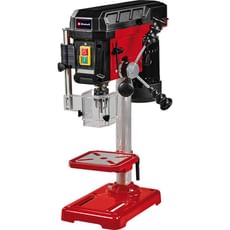
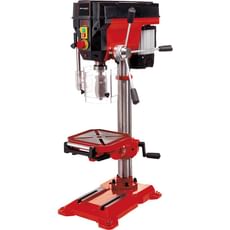
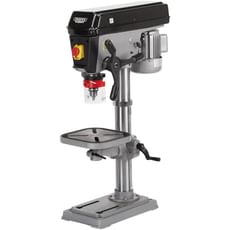
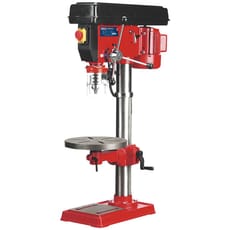
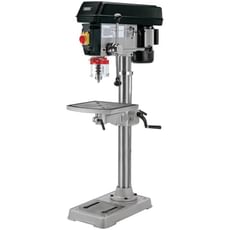
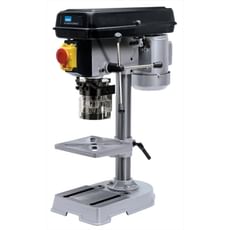
A bench drill, also known as a pillar drill or drill press, is an essential piece of workshop equipment that brings precision and accuracy to drilling operations that handheld tools simply cannot match. Designed to be securely bolted to a workbench, these machines feature a vertical column (or pillar) supporting a motorised drill head that can be lowered with controlled, even pressure onto the workpiece below. Whether you're drilling consistent hole depths, creating perfectly perpendicular holes, or working with materials that require steady, continuous pressure, a bench drill transforms what would be challenging work with a handheld drill into straightforward, repeatable operations.
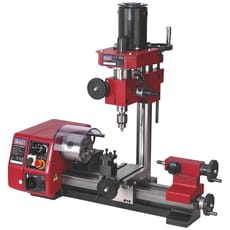
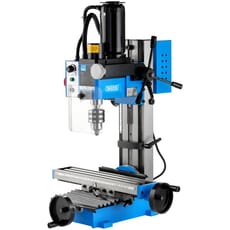
The selection at Tooled-Up.com includes models from trusted manufacturers including Sealey, Draper, Einhell, and Bosch, offering everything from compact 5-speed entry-level machines ideal for DIY enthusiasts and woodworkers, through to heavy-duty 16-speed models capable of metalworking applications. With throat depths ranging from smaller benchtop units to larger 180mm capacity machines, and features including variable speed digital displays, radial arm capability, and even specialist milling and drilling combinations, there's a bench drill to suit workshops of all sizes and requirements.
Entry-level models are perfectly suited to drilling wood, plastics, and softer materials, whilst more powerful machines with greater speed ranges and robust construction are designed to handle drilling through metals, including steel and aluminium. The ability to adjust spindle speeds—from as few as 5 speeds on basic models up to 16 speeds or even infinitely variable speed control—allows you to match the drilling speed to your material and bit size, preventing overheating and ensuring clean, precise holes every time.
Jargon Buster
- Chuck Size: The maximum diameter of drill bit shank the drill can accommodate, typically 13mm or 16mm on bench drills. Larger chuck sizes offer greater versatility for bigger drilling operations.
- Throat Depth: The distance from the centre of the chuck to the support column, determining the maximum width of material you can drill into the centre of. Common sizes range from 90mm to 180mm.
- Spindle Travel (or Quill Travel): The maximum vertical distance the drill bit can move downwards, typically between 50-80mm, which determines how deep you can drill in a single operation.
- Morse Taper: A standardised tapered fitting system used to secure drill chucks and accessories to the spindle. Common sizes include MT1 and MT2 (Morse Taper 1 and 2).
- Spindle Speed (RPM): The rotational speed of the chuck measured in revolutions per minute. Different materials require different speeds—slower for metals, faster for wood and plastics.
- Table Tilt: Many bench drills feature worktables that can be tilted and locked at angles, allowing for angled drilling operations without complex jigs or fixtures.
Who Uses Bench Drills?
Bench drills are invaluable tools across a wide range of trades and applications:
- Woodworkers and Joiners: For precision dowel holes, shelf pin drilling, and accurate mortising work
- Metal Fabricators and Engineers: Drilling consistent holes in steel, aluminium, and other metals with proper speed control
- Model Makers and Hobbyists: Creating precise small-diameter holes in various materials for detailed projects
- Maintenance Engineers: Workshop repairs requiring accurate drilling in components and machinery parts
- DIY Enthusiasts: Home workshop tasks from furniture making to general repairs requiring drilling accuracy
- Educational Workshops: Schools, colleges, and training centres teaching practical engineering and woodworking skills
- Automotive and Motorcycle Mechanics: Drilling bolt holes, modifications, and repairs to metal components
- Electronics and Electrical Workers: Creating precise mounting holes in enclosures and panels
How to Choose the Right Bench Drills
Intended Materials: Consider what you'll be drilling most frequently. If you're primarily working with wood and plastics, a 5-speed entry-level model from Einhell or Draper will serve you well. For metalworking, invest in a more powerful machine with at least 12-16 speeds like the Sealey GDM120B or Draper BD65016E, which offer the lower RPM settings essential for drilling steel and other metals without destroying bits or overheating material.
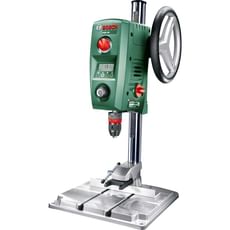
Power and Motor Size: Motor power typically ranges from 350W on basic models up to 750W or more on heavy-duty machines. Greater power means the ability to drill larger diameter holes and work with harder materials without the motor bogging down under load. The Bosch PBD 40, for instance, features a powerful 710W motor with constant electronic technology that maintains consistent speed regardless of workload.
Speed Range and Adjustment: Multi-speed models use a stepped pulley system requiring manual belt changes between speed ranges, whilst variable speed machines like the Sealey PDM10B offer convenient adjustment via a dial or digital control. Consider whether the convenience of variable speed justifies the additional cost for your applications.
Table Size and Adjustability: A larger worktable provides better support for bigger workpieces. Look for tables that tilt and can be raised or lowered easily on the column. Some models include T-slots or mounting holes for securing clamps and vices.
Chuck Capacity and Throat Depth: A 13mm chuck handles most general drilling tasks, but a 16mm chuck on larger models provides versatility for bigger bits. Throat depth determines how far from an edge you can drill—essential if you're working with large panels or sheet materials.
Build Quality and Stability: Cast iron construction provides superior vibration dampening and longevity compared to pressed steel. Check the weight—heavier machines are generally more stable and rigid, reducing vibration and improving accuracy.
Popular Accessories
- Drill Press Vices: Essential for securely holding workpieces, preventing dangerous spinning or movement during drilling. Available in various jaw widths to suit different work sizes.
- Machine Vice/Clamps: Heavy-duty metalworking vices that bolt to the drill table, providing rock-solid clamping for metal components.
- Drill Bit Sets: HSS (High-Speed Steel) bits for metal, brad point bits for wood, and specialist bits like Forstner bits for flat-bottomed holes.
- Centre Punches and Marking Tools: For accurately marking hole centres and creating starter dimples that prevent drill bits from wandering.
- Step Drills and Hole Saws: For creating larger diameter holes in sheet materials and thin metals.
- Mortising Attachments: Convert your drill press into a mortising machine for cutting square holes in woodworking joints.
- Cutting Fluid and Lubricants: Essential for metalworking to cool bits, improve cutting performance, and extend tool life.
- LED Work Lights: Clip-on or magnetic work lights to illuminate the drilling area for improved visibility and accuracy.
Safety Information
Bench drills are powerful machines that demand respect and proper safety practices. Always ensure you're working in accordance with HSE guidelines and workshop safety protocols.
Never wear gloves when operating a bench drill—loose material can become caught in the rotating chuck or bit, pulling your hand into the machine. Similarly, avoid loose clothing, jewellery, ties, and ensure long hair is tied back securely.
Eye protection is mandatory at all times when operating a bench drill. Flying swarf (metal chips), wood splinters, and broken drill bits can cause serious eye injuries. Safety glasses or a face shield should always be worn.
Secure workpieces properly using a drill press vice, clamps, or other suitable holding methods. Never attempt to hand-hold work, especially small pieces or when drilling metal—the drill bit can grab the workpiece and spin it violently, causing injury.
Ensure electrical safety by checking that your machine is correctly earthed and connected to a suitable 240v UK power supply. Many workshops benefit from RCD (Residual Current Device) protection on power tool circuits.
Allow the drill to reach full speed before bringing the bit into contact with the workpiece, and let it spin down completely before leaving the machine unattended. Remove chuck keys immediately after adjustment—many accidents occur when machines are started with keys still in the chuck.
Frequently Asked Questions
What's the difference between a bench drill and a pillar drill?
The terms are often used interchangeably in the UK. Technically, a bench drill is designed to be mounted on a workbench, whilst a pillar drill typically refers to a larger floor-standing model. However, both operate on the same principle with a vertical column supporting a motorised drill head. The key difference is size, capacity, and whether the machine is bench-mounted or free-standing.
How do I know what speed to use for different materials?
As a general rule, harder materials require slower speeds whilst softer materials can be drilled at higher speeds. For steel, use lower speeds (around 500-1000 RPM for typical bit sizes), for aluminium medium speeds (1500-2500 RPM), and for wood higher speeds (2000-3000+ RPM). Larger diameter bits also require slower speeds than smaller bits. Most machines include a speed chart on the head or in the manual as a reference guide.
Can I use my bench drill for metalworking if it only has 5 speeds?
It depends on the materials and hole sizes involved. Entry-level 5-speed models can handle softer metals like aluminium and thin mild steel, particularly with smaller drill bits, but they're not ideal for extensive metalworking. For regular metal drilling, especially harder steels or larger diameter holes, invest in a more powerful model with 12-16 speeds that can run at the lower RPMs required for metal without straining the motor.
Do I need to bolt my bench drill down?
Yes, absolutely. All bench drills should be securely bolted to a sturdy workbench or stand. This prevents movement during operation, improves accuracy, and is essential for safety. An unsecured drill can tip or move when pressure is applied, particularly with larger workpieces or when drilling harder materials. Most machines have pre-drilled mounting holes in the base for this purpose.
What maintenance does a bench drill require?
Regular maintenance is minimal but important. Keep the column clean and lightly oiled to ensure smooth table adjustment. Check and adjust belt tension periodically if your model uses belt drive for speed changes. Lubricate the chuck and clean out any accumulated swarf or dust from the mechanism. Check that all adjustable components (table locks, depth stops) remain tight and functional. Always unplug the machine before any maintenance work.