

Woodworking Jigs
Pay in 3 interest-free payments on purchases from £30-2000 with  . Learn more.

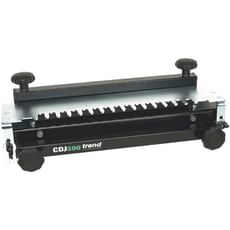
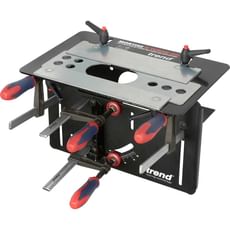
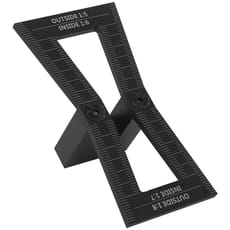
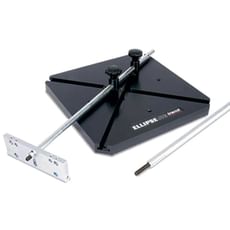
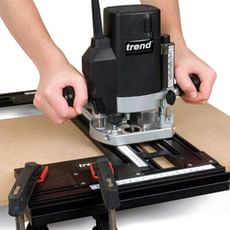
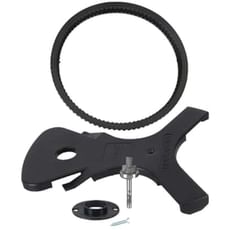


 Loading...
End of content
Error - No more pages to load
About Woodworking Jigs
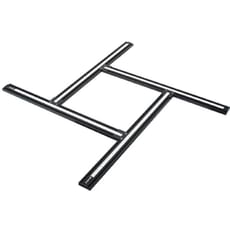
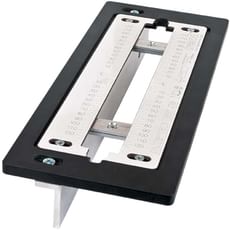
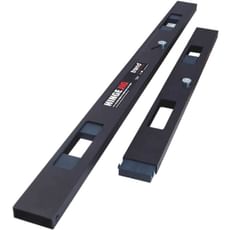
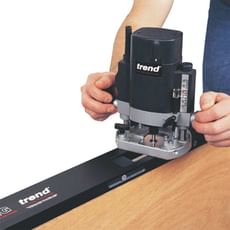
Woodworking jigs are precision guides and fixtures that help achieve consistent, accurate results in joinery, routing, and fabrication tasks. From dovetail jigs that create perfect interlocking joints to worktop jigs designed for kitchen fitting, these tools eliminate guesswork and significantly reduce the margin for error. Whether cutting hinge recesses, creating decorative joints, or routing worktop corners and cut-outs, a quality jig transforms complex operations into repeatable processes that deliver professional results every time.
The selection at Tooled-Up.com encompasses specialist jigs for various applications, with particular strength in worktop routing solutions from Trend. Kitchen fitters will find comprehensive worktop jig systems for creating corner joints, sink apertures, and hob cut-outs, whilst furniture makers and joiners can choose from dovetail jigs, hinge jigs, and circle-cutting attachments. Many of these jigs work in conjunction with standard routers, providing a cost-effective way to expand workshop capabilities without investing in dedicated machinery.
Modern woodworking jigs combine robust construction with clever design features that speed up setup and improve accuracy. Quick-adjustment mechanisms, clearly marked scales, and reversible templates allow tradespeople to work efficiently on site or in the workshop. For those undertaking kitchen installations, worktop jigs with multiple radius options and hot rod capabilities provide the flexibility needed to handle various worktop materials and corner configurations with confidence.
Jargon Buster
- Dovetail Jig: A template-based system that guides a router to cut interlocking dovetail joints, traditionally used in drawer construction. These jigs typically feature adjustable spacing and accommodate various board widths.
- Worktop Jig: A specialist routing jig designed for kitchen fitting tasks, including corner joints (mason's mitres), sink cut-outs, and hob apertures. Most systems include radius options for creating curved corners in laminate worktops.
- Hinge Jig: A positioning guide that ensures hinge recesses are routed to consistent depth and location, essential for hanging doors and cabinet work. Available in single-hinge and multi-hinge configurations.
- Template Material: Typically clear acrylic sheet used to create custom jig templates. The transparency allows positioning over marked lines whilst providing a durable edge for router guide bushes to follow.
- Guide Bush: A cylindrical collar that fits into a router base plate, running against the jig template edge to maintain a consistent offset between the template and the cutting bit.
- Hot Rod: A heated rod used with worktop jigs to create clean cut-outs in laminate surfaces without chipping, particularly useful for sink and hob apertures in post-formed worktops.
Who Uses Woodworking Jigs?
- Kitchen Fitters: Rely heavily on worktop jigs for professional corner joints and appliance cut-outs
- Joiners and Carpenters: Use dovetail and hinge jigs for furniture making and cabinet installation
- Shopfitters: Require precision jigs for consistent results across multiple installations
- Workshop Furniture Makers: Employ specialist jigs for decorative joinery and production work
- Maintenance Joiners: Use hinge jigs and general-purpose routing jigs for repair and refurbishment work
- Serious DIY Enthusiasts: Invest in quality jigs for kitchen renovations and furniture projects
- Bathroom Fitters: Utilise worktop jigs for vanity unit installations and basin cut-outs
How to Choose the Right Woodworking Jigs
Application Requirements: Identify your primary tasks before purchasing. Kitchen fitters need worktop jig systems with radius options and aperture-cutting capabilities, whilst furniture makers should prioritise dovetail and hinge jigs. Consider whether you need a single-purpose jig for specialist work or a versatile system that handles multiple operations.
Router Compatibility: Verify that jigs are compatible with your existing router and guide bush system. Tooled-Up stocks jigs from manufacturers like Trend that work with standard router accessories, but checking specifications ensures seamless integration. Consider the router power needed—larger worktop jigs benefit from routers with 1200W or greater output.
Material Capacity: Check the maximum workpiece dimensions the jig can accommodate. Dovetail jigs specify maximum board width and thickness, whilst worktop jigs indicate the largest corner radius and cut-out dimensions possible. Allow headroom for your typical projects to avoid limitations.
Build Quality and Durability: Professional-grade jigs feature machined aluminium components and hardened steel guide rods that maintain accuracy through repeated use. Site-based tradespeople should prioritise robust construction that withstands transportation and daily use, whilst also considering protective carry cases for valuable jig systems.
Ease of Setup: Time is money on site, so look for jigs with clear calibration marks, quick-adjustment mechanisms, and comprehensive instructions. Some worktop jigs feature pre-marked settings for common corner radii, eliminating measurement errors and speeding up installation work.
Expandability: Consider whether the jig system offers additional accessories or templates. Many professional joiners start with a basic hinge jig and expand their capabilities with different size templates, whilst kitchen fitters might add hot rod capabilities to their worktop jig setup later.
Popular Accessories
- Router Guide Bushes: Essential components that connect your router to jig templates, available in various diameters
- Template Material Sheets: Clear acrylic for creating custom jig templates and patterns
- Replacement Pins and Fixings: Spare components to maintain worktop jigs and ensure long service life
- Router Bits: Straight cutters, bearing-guided bits, and specialist profiles for jig work
- Carry Cases: Protective storage for comprehensive jig systems, particularly worktop jig sets
- Hot Rod Elements: Heated cutting tools for laminate worktop apertures
- Clamps and Hold-Downs: Secure workpieces and jigs during routing operations
- Dust Extraction Accessories: Maintain visibility and reduce cleanup when using routers with jigs
Safety Information
Router operation with jigs requires strict adherence to safety protocols. Always wear appropriate PPE including safety glasses or face shields, hearing protection, and dust masks when routing. Ensure workpieces are securely clamped before starting any operation—movement during cutting can damage both work and equipment.
Disconnect routers from 240v mains power before changing bits or adjusting jig settings. Never reach under or near the router base whilst the motor is running, and allow cutters to stop completely before lifting the router from the workpiece. HSE guidance emphasises proper extraction when routing—fine dust from MDF and composite materials presents respiratory hazards.
When using worktop jigs on site, ensure stable work surfaces and adequate lighting. Hot rod elements reach extremely high temperatures and must be allowed to cool before storage. Keep jig components clean and free from resin build-up, as accumulated debris can affect accuracy and potentially cause binding during operation.
Frequently Asked Questions
Q: Can I use any router with woodworking jigs?
A: Most jigs work with standard routers fitted with the appropriate guide bush system. Check that your router accepts guide bushes and has sufficient power—worktop jigs typically require 1200W minimum, whilst lighter dovetail work can use smaller routers. Plunge routers offer better control than fixed-base models for jig work.
Q: What's the difference between contractor and professional worktop jigs?
A: Contractor jigs typically handle standard kitchen installations with common radius options and basic cut-out capabilities. Professional systems offer greater capacity, additional radius options, hot rod compatibility, and more robust construction for daily use. Consider your workload—occasional kitchen fitters can manage with contractor models, whilst full-time installers benefit from professional features.
Q: Do I need different jigs for different worktop thicknesses?
A: Quality worktop jigs accommodate various thicknesses through adjustable settings. Most handle standard 28mm, 38mm, and 40mm worktops without additional components. Check the manufacturer's specifications to confirm the thickness range, particularly if working with ultra-thin or extra-thick materials.
Q: How do I maintain accuracy in my woodworking jigs?
A: Keep jig components clean using appropriate solvents to remove resin and adhesive build-up. Store jigs in protective cases to prevent damage to critical surfaces. Periodically check calibration marks and test cuts on scrap material before important work. Replace worn guide bushes promptly as excessive play affects accuracy.
Q: Are dovetail jigs suitable for beginners?
A: Modern dovetail jigs simplify what was traditionally a challenging hand-cut joint. With clear instructions and practice on scrap wood, beginners can achieve good results. Start with through dovetails before attempting half-blind variations, and invest time understanding the relationship between bit size, guide bush diameter, and finger spacing for best outcomes.