

Multimeters
Pay in 3 interest-free payments on purchases from £30-2000 with  . Learn more.
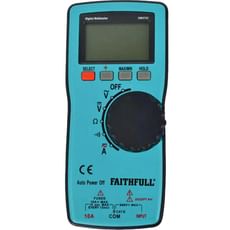
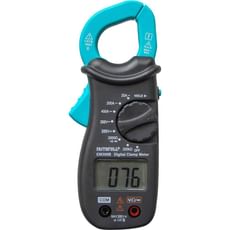
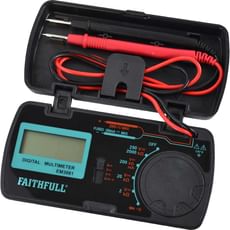
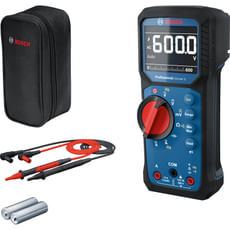
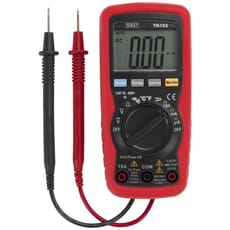
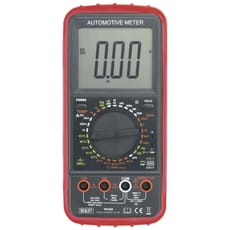
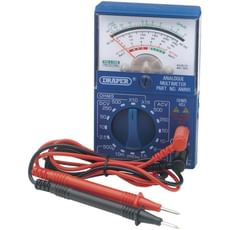
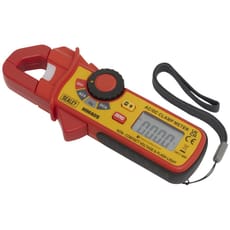
 Loading...
End of content
Error - No more pages to load
About Multimeters
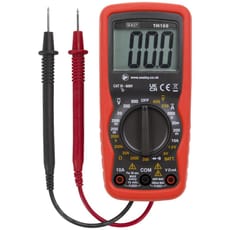
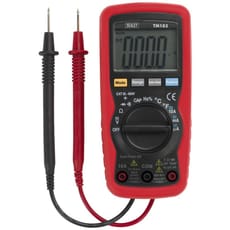
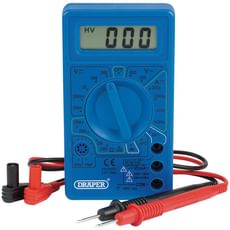
A multimeter is an essential diagnostic tool for anyone working with electrical circuits, whether on construction sites, in automotive workshops, or during home maintenance projects. These versatile instruments combine multiple measurement functions in a single device, typically measuring voltage (AC and DC), current, and resistance. Modern digital multimeters have evolved far beyond basic testing, with advanced models offering True RMS measurements, continuity testing, capacitance readings, frequency measurement, and even non-contact voltage detection.
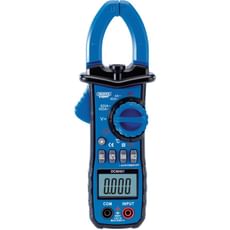
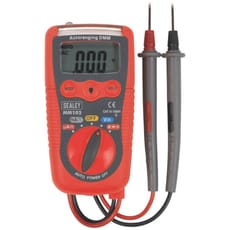
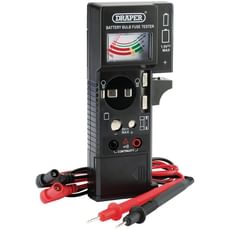
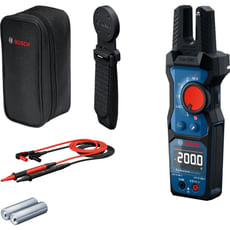
The multimeter selection at Tooled-Up.com ranges from compact pocket testers ideal for quick continuity checks to professional-grade instruments built for demanding industrial environments. Digital multimeters (DMMs) dominate the market with their clear LCD displays and precise readings, whilst clamp meters offer the advantage of measuring current without breaking the circuit. Specialised variants include automotive multimeters with specific functions for vehicle diagnostics, and fork multimeters designed for testing batteries and power supplies. With IP-rated models offering protection against dust and moisture, today's multimeters are built to withstand the harsh realities of jobsite work.
Whether you're an electrician testing 240v installations, a heating engineer troubleshooting control circuits, or a DIY enthusiast maintaining household appliances, choosing the right multimeter depends on your specific requirements. Professional brands like Bosch Professional, Fluke, and Sealey offer robust construction and advanced features, whilst manufacturers such as Draper and Faithfull provide excellent value for occasional users and apprentices building their first toolkit.
Jargon Buster
- True RMS (Root Mean Square): An advanced measurement method that provides accurate readings when testing non-linear loads such as variable speed drives, electronic ballasts, and switch-mode power supplies. Essential for modern electrical installations with complex waveforms.
- CAT Rating (Category Rating): A safety classification indicating the maximum voltage transient the multimeter can safely withstand. CAT III 600V is standard for distribution-level electrical work, whilst CAT IV ratings are required for supply authority installations.
- Auto-ranging: A convenient feature that automatically selects the appropriate measurement range, eliminating the need to manually switch between scales and reducing the risk of damaging the meter through incorrect range selection.
- Continuity Testing: A function that checks whether an electrical path is complete, typically indicated by an audible beep. Essential for verifying connections, testing fuses, and tracing cables.
- Impedance: The total opposition to current flow in an AC circuit, combining both resistance and reactance. High-impedance inputs (typically 10 megohms) prevent the multimeter from affecting sensitive electronic circuits during measurement.
- Hold Function: Freezes the displayed reading on screen, allowing measurements to be taken in awkward positions or poor lighting conditions where the display cannot be viewed during testing.
Who Uses Multimeters?
- Electricians and electrical contractors: Testing circuits, verifying installations, fault-finding in domestic and commercial properties
- Heating engineers and plumbers: Diagnosing boiler controls, testing pumps, checking thermostats and motorised valves
- Automotive technicians: Testing batteries, alternators, sensors, and complex vehicle electrical systems
- Maintenance engineers: Industrial equipment troubleshooting, motor testing, control panel diagnostics
- Appliance repair technicians: Testing components in washing machines, cookers, refrigerators and other household equipment
- Renewable energy installers: Solar panel testing, wind turbine maintenance, battery bank monitoring
- Telecoms and data engineers: Low-voltage circuit testing, power supply verification
- DIY enthusiasts and homeowners: Basic electrical testing, battery checking, general household troubleshooting
- Educational institutions: Teaching electrical principles, electronics courses, apprenticeship training
How to Choose the Right Multimeters
Measurement Requirements: Consider which functions you'll use regularly. Basic models measure voltage, current, and resistance, but professional work often demands additional capabilities such as capacitance, frequency, temperature, or diode testing. Clamp meters are invaluable when you need to measure current without disconnecting circuits, particularly useful when working with three-phase installations or high-current applications.
Safety Rating: Never compromise on safety ratings. The CAT rating must match your working environment – CAT III is essential for fixed installation work on 240v mains circuits, whilst CAT IV is required for work on incoming supplies. Look for meters meeting BS EN 61010 standards with adequate fuse protection and finger guards on the probe connection points.
Accuracy and Resolution: Professional tradespeople should consider True RMS meters for accurate measurements on modern electrical systems with electronic loads. The resolution (number of counts or digits) determines how precisely the meter can display readings – a 6000-count meter provides finer resolution than a 2000-count model, important for sensitive measurements.
Durability and Protection: Jobsite conditions demand rugged construction. IP65-rated models available from Tooled-Up.com offer protection against dust and water ingress, whilst drop-rated cases withstand the inevitable knocks and falls. Reinforced test lead connections and protective holsters extend working life significantly.
Display and Usability: A large, backlit display is essential for working in poorly lit areas such as loft spaces, plant rooms, or under kitchen units. Auto-ranging simplifies operation, whilst hold and min/max functions capture readings in awkward positions. Battery life matters too – look for models offering hundreds of hours between changes.
Brand and Support: Established manufacturers like Bosch Professional, Sealey, and Fluke provide reliable calibration, spare parts availability, and technical support. Budget models suit occasional use, but daily professional work justifies investing in quality instruments with proven durability and accuracy retention.
Popular Accessories
- Replacement test leads: Heavy-duty silicone leads with shrouded connectors for enhanced safety
- Probe sets: Specialist probes including needle tips, clips, and non-contact voltage detectors
- Magnetic hangers: Keep your multimeter accessible and visible whilst working in control panels or distribution boards
- Carrying cases: Protective storage for meters and accessories, often with belt loops for convenient portability
- Clamp-on current probes: Convert standard multimeters into clamp meters for AC current measurement
- Temperature probes: Thermocouple attachments for multimeters with temperature measurement capability
- Crocodile clips and adaptors: Hands-free testing of components and batteries
- Fuse kits: Replacement fuses specific to your meter model, essential for restoring protection after overload
- Voltage indicator pens: Complementary non-contact testers for initial safety checks
Safety Information
Voltage Category Compliance: Always use a multimeter with an appropriate CAT rating for the work being undertaken. Working on 240v domestic installations requires CAT III rated equipment as a minimum. Never use under-rated equipment on higher voltage or transient-prone circuits, as internal protection may be insufficient.
Test Lead Inspection: Before every use, inspect test leads for damage, exposed conductors, or compromised insulation. Damaged leads are a major cause of electrical accidents. Replace leads showing any signs of deterioration immediately, and ensure replacements meet the same CAT rating as your meter.
Correct Function Selection: Always select the appropriate function before connecting to a circuit. Connecting to a voltage source whilst set to current or resistance mode can damage the meter and create a short-circuit hazard. When measuring unknown voltages, start with the highest range and work downwards.
De-energised Testing: Where possible, conduct resistance and continuity testing only on de-energised circuits. Always verify circuits are isolated using the meter's voltage function before attempting resistance measurements. Follow proper isolation procedures including lock-off devices and warning notices.
Personal Protective Equipment: Wear appropriate PPE when testing live circuits, including insulated gloves rated for the voltage being tested. Safety glasses protect against arc flash in fault conditions. Ensure compliance with HSE guidance and the Electricity at Work Regulations 1989.
Environmental Awareness: Do not use multimeters in explosive atmospheres unless specifically rated for such use (ATEX certified). Moisture ingress compromises safety even in IP-rated models, so avoid using meters with condensation inside the case or wet test leads.
Frequently Asked Questions
What's the difference between a standard multimeter and a True RMS model?
Standard averaging multimeters provide accurate readings only when measuring pure sinusoidal waveforms, which are increasingly rare in modern electrical installations. True RMS (Root Mean Square) multimeters accurately measure the complex waveforms produced by variable speed drives, LED lighting, switch-mode power supplies, and other electronic loads. For professional electricians working on contemporary installations, True RMS capability is essential for reliable diagnostics and compliance testing.
Can I use any multimeter for testing 240v mains circuits?
No – the meter must have an appropriate CAT (category) rating for safety. Domestic 240v socket circuits and lighting installations require CAT III rated equipment as a minimum, which protects against transient overvoltages occurring in fixed installations. The CAT rating relates to both the meter's internal protection and the quality of test leads supplied. Using under-rated equipment on mains voltage work is dangerous and contravenes electrical safety regulations.
Why does my multimeter have different current connection sockets?
Most multimeters feature separate input sockets for different current ranges because measuring current requires the meter to be connected in series with the load, passing the full current through internal components. The common (COM) socket and standard ampere socket typically handle up to 10A through a protective fuse, whilst the dedicated high-current socket (often 10A or 20A) uses a direct connection or higher-rated fuse. Always check the maximum current rating and connection requirements before testing to avoid damaging the meter.
How often should I calibrate my multimeter?
For professional trade use where accuracy affects compliance or safety decisions, annual calibration is recommended and may be required by quality management systems or insurance policies. Tooled-Up stocks multimeters from manufacturers offering calibration services with traceable certification. DIY users and those conducting non-critical measurements can verify accuracy periodically using known voltage sources like fresh batteries or calibrated reference equipment. Any meter that's been dropped, exposed to overvoltage, or shows inconsistent readings should be professionally tested regardless of the last calibration date.
What's the advantage of a clamp meter over a standard multimeter?
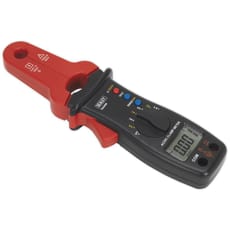
Clamp meters measure current by detecting the magnetic field around a conductor, eliminating the need to break the circuit and connect the meter in series. This non-invasive method is safer, faster, and essential when testing live circuits where isolation isn't practical. Clamp meters excel at measuring higher currents in installations, motor circuits, and distribution boards. However, they're generally less accurate than in-series measurements and may struggle with low currents below 1A, so standard multimeters remain necessary for comprehensive electrical testing.