
Blue Spot Draw Tape & Cable Guides

Loading...
End of content
Error - No more pages to load
Blue Spot Draw Tape & Cable Guides at Tooled-Up.com
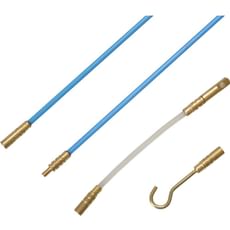
Blue Spot Draw Tape & Cable Guides are designed to help you get cable from A to B without lifting every floorboard or chasing out every wall. Draw tapes pull cable through conduit and trunking. Cable guide rods push a line through cavity walls, lofts and under floors. Both cut the time spent on first-fix and retrofit cable runs.
Tooled-Up.com stocks Blue Spot Draw Tape & Cable Guides for electricians, data installers and keen DIYers who need a straightforward way to route cable through awkward spaces. The Cable Guide Rods sub-category covers the push-through side of the job, where a rod's stiffness lets you steer a line through voids that a flexible tape can't cross.
Key Features of Blue Spot Draw Tape & Cable Guides
- Semi-rigid rod design: Cable guide rods are stiff enough to push through a void, yet flexible enough to follow gentle bends. This means fewer snags and less time spent fishing for a line.
- Draw tape for enclosed runs: A draw tape is pushed through conduit or trunking, then used to pull the cable back. This suits runs where there is a clear, enclosed pathway.
- Attachment points: Eyelets, connectors or fittings let you secure a cable or pull line to the end. Check the product specification for the fitting type on the item you choose.
- Site-ready construction: These tools are made for tool-bag use, so they cope with being carried from job to job.
- Choice of formats: Draw tapes and cable guide rods suit different jobs, so you can match the tool to the route rather than forcing one tool to do everything.
Who Uses Blue Spot Draw Tape & Cable Guides?
These products suit anyone who regularly needs to route cable through finished or partly finished structures:
- Electricians: Running circuits through conduit, trunking, lofts and cavity walls during rewires and extensions.
- Data and network installers: Routing data cable between rooms and floors with minimal disruption.
- Security and CCTV installers: Feeding cable to cameras, alarm sensors and access control points.
- Solar and EV charger installers: Taking cable from external equipment to consumer units through voids and ducting.
- Maintenance engineers: Adding or replacing cables in existing buildings.
- DIYers: Garden lighting, extra sockets and home networking projects.
Popular Blue Spot Draw Tape & Cable Guides
Cable Guide Rods
Cable guide rods are the go-to choice when you need to push a line through a space rather than pull it. Typical jobs include running cable down a cavity wall, across a loft, or along a joist void under floorboards. Once the rod reaches its exit point, attach the cable or a pull line and draw it back through.
Draw Tapes
Draw tapes are suited to conduit, ducting and trunking, where the tape follows a defined route and carries the cable back with it. Browse the Blue Spot selection at Tooled-Up.com to compare available formats and choose the right one for your installation.
Frequently Asked Questions
What is the difference between a draw tape and a cable guide rod?
A draw tape is a flat tape that suits enclosed routes such as conduit and trunking. A cable guide rod is stiffer and is pushed through open voids such as cavity walls, lofts and under floors, where you need more pushing power and control.
Which should I choose for running cable through a cavity wall?
A cable guide rod is usually the better choice. Its rigidity lets you push it through the void and steer it towards the exit point, which a flexible tape may struggle to do.
Can I use these tools on live circuits?
No. Always isolate the supply before working near existing 240v cabling, conduit or trunking. Follow BS 7671 and HSE guidance, and keep rods and tapes away from live conductors.
How should I look after a draw tape or guide rod?
Wipe it clean after use, check it for kinks or damage, and store it dry. Replace any tape or rod that looks damaged, as a failure mid-pull can cost time and damage cable. Shop Blue Spot Draw Tape & Cable Guides at Tooled-Up.com when it's time to replace worn kit.