
Blue Spot Drilling Accessories







Loading...
End of content
Error - No more pages to load
Blue Spot Drilling Accessories at Tooled-Up.com
Blue Spot Drilling Accessories cover the consumables and fittings that go in the chuck of a drill or driver. Tooled-Up.com stocks Blue Spot drill bits, cone and stepped drill bits, countersinks, nut drivers, rotary brushes, and chucks, keys and adaptors. Together they let you drill, enlarge, finish and fasten without changing brands mid-job.
The selection is aimed at practical site and workshop use. You can start a hole with a drill bit, open it up with a cone or stepped bit, and tidy the edge with a countersink. Nut drivers and rotary brushes cover fastening and surface cleaning, and chucks, keys and adaptors keep everything fitting your drill.
Browse the Blue Spot selection at Tooled-Up.com to find replacements for worn bits and accessories that extend what an existing drill can do.
Key Features of Blue Spot Drilling Accessories
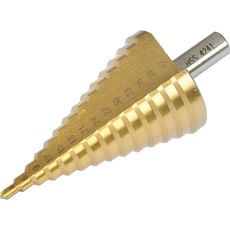
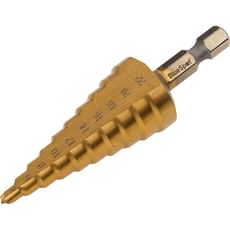
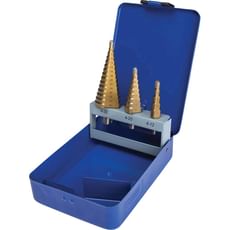
- Cone and stepped drill bits: One bit cuts several hole sizes in sheet material, so you carry fewer bits and don't need to swap between sizes. Stepped designs also help produce clean, round holes in thin metal.
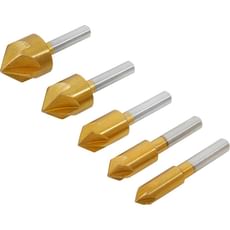
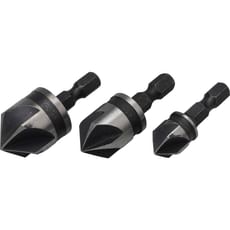
- Countersinks: These cut a tapered recess so screw heads sit flush. That gives a neater finish and stops heads snagging on joinery, cabinetry and fitted work.
- Nut drivers: These let a drill or driver run hex-head fasteners, which is quicker than using a spanner on repetitive fixing jobs.
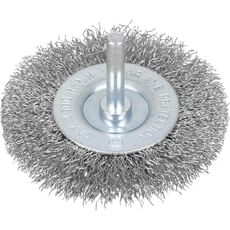
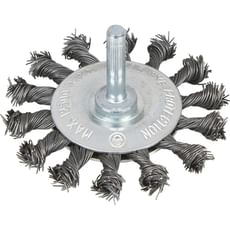
- Rotary brushes: Fitted to a drill, they clean rust, paint and debris from metal and other surfaces ready for finishing.
- Chucks, keys and adaptors: Replacement chucks and keys restore grip on worn or lost parts. Adaptors let you fit accessories to a different drill or driver. Always check the shank and thread size in the product listing before ordering.
Who Uses Blue Spot Drilling Accessories?
Blue Spot Drilling Accessories suit a wide mix of trades and home users:
- Electricians: Stepped bits for neat holes in metal enclosures and trunking, and drill bits for cable runs.
- Plumbers and heating engineers: Drill bits and cone bits for pipe clearances, and nut drivers for fixings and clips.
- Carpenters and joiners: Countersinks for flush screw finishes on frames, doors and fitted furniture.
- Fabricators and maintenance staff: Rotary brushes for surface prep, and stepped bits for sheet metal.
- DIY enthusiasts: Accessories that make a standard drill more versatile around the home.
Popular Blue Spot Drilling Accessories
Drill bits are the starting point for most buyers and handle everyday hole-making. Cone and stepped drill bits suit anyone who regularly works in sheet metal or needs several diameters from one tool. Countersinks are a good addition to any joiner's kit, while nut drivers are handy for fixings on site.
Rotary brushes are worth having for cleaning and prep, and the chucks, keys and adaptors section helps keep existing drills working properly. The Tooled-Up Blue Spot selection lets you pick exactly the accessory you need for the job.
Frequently Asked Questions
When should I use a stepped drill bit instead of a standard drill bit?
A stepped or cone bit works best in thin sheet material such as metal panels and enclosures. It cuts progressively larger holes with one bit and leaves a cleaner edge than a standard twist bit. For thicker material or deep holes, a standard drill bit is the better choice.
What does a countersink do?
A countersink cuts a tapered recess around a pilot hole so a countersunk screw head sits flush with or just below the surface. It is commonly used in woodwork and fitted furniture to give a neat finish.
How do I know which chuck or adaptor will fit my drill?
Check the thread size or fitting type on your drill and compare it with the specification in the product listing. If you are unsure, check your drill's manual before ordering. Use the chuck key only when the drill is disconnected from the power source or has the battery removed.
Can I use a rotary brush in any drill?
Rotary brushes are designed for use in a drill or similar power tool, but check the maximum speed rating and shank size first. Wear safety glasses and gloves, as loose wires and debris can be thrown off during use. Follow HSE guidance for appropriate PPE.