
Blue Spot Engineering Tools


Loading...
End of content
Error - No more pages to load
Blue Spot Engineering Tools at Tooled-Up.com
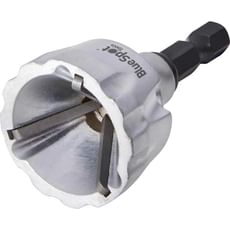
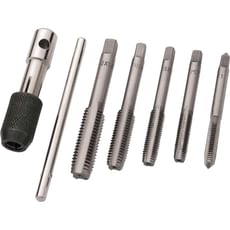
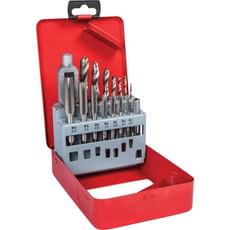
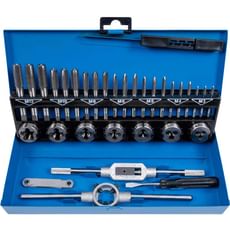
Blue Spot Engineering Tools cover the hands-on finishing and threading jobs that come up in every metalworking workshop. The selection is built around two product groups: Taps & Dies for cutting and repairing threads, and Deburring Tools for cleaning up sharp edges after cutting and drilling.
Together, these tools take a workpiece from rough-cut to properly finished. Taps and dies create or restore threads in metal, and deburring tools remove the burrs left behind so parts fit together cleanly and are safe to handle. Tooled-Up.com stocks Blue Spot Engineering Tools for workshop, maintenance and fabrication use.
Key Features of Blue Spot Engineering Tools
Taps & Dies
- Internal and external threading: taps cut internal threads in drilled holes, while dies cut external threads on rod and bolt stock. Between them you can make fixings from scratch or repair existing ones.
- Metric and imperial options: thread sizes cover modern metric work as well as older imperial threads found on classic vehicles and legacy machinery.
- Set formats: tap and die sets usually come in a case with the matching wrenches. Sizes stay organised and are quick to find mid-job.
Deburring Tools
- Clean edge finishing: removing burrs from cut, drilled or sawn metal gives a smooth edge that sits flush and is much safer on bare hands.
- Hand-operated control: deburring by hand lets you take off just enough material without altering the part's dimensions.
- Quick and portable: compact tools are easy to keep in a toolbox for on-site finishing.
Who Uses Blue Spot Engineering Tools?
These tools suit anyone who cuts, drills or fits metal components:
- Maintenance engineers – re-cutting damaged threads and tidying repaired parts on site
- Fabricators and welders – deburring cut steel before welding or assembly
- Automotive technicians – restoring stripped threads on engine, chassis and bodywork fixings
- Agricultural engineers – repairing worn threads on farm machinery
- Model engineers and home workshop users – threading small components and finishing precision parts
- Engineering students – learning thread-cutting and edge-finishing techniques
Popular Blue Spot Engineering Tools
Taps & Dies are the core of the Blue Spot engineering selection. Choose a set when you need a spread of thread sizes for general workshop use. Individual taps and dies suit specific jobs, such as chasing a single damaged thread. Check whether your work needs metric or imperial threads before you buy.
Deburring Tools are the natural companion. After drilling a hole for tapping or cutting a bar to length, a quick pass removes the burr and leaves a clean start for the thread. Browse the full Blue Spot selection at Tooled-Up.com to build a complete threading and finishing kit.
Frequently Asked Questions
What is the difference between a tap and a die?
A tap cuts a thread inside a pre-drilled hole, while a die cuts a thread on the outside of a rod or bolt. Many jobs need both, which is why they are often sold together in sets.
Do I need to drill a specific hole size before tapping?
Yes. Each tap size needs a matching tap drill size, so check a tapping size chart before drilling. A hole that is too small risks breaking the tap, and one that is too large gives a weak thread.
Should I use lubricant when cutting threads?
Yes. Cutting fluid reduces friction, improves thread quality and helps protect the cutting edges. Back the tap or die off regularly to clear swarf as you work.
When should I deburr a workpiece?
Deburr after any cutting, sawing or drilling, and before tapping, assembly or welding. Removing burrs improves fit and reduces the risk of cuts. Wear safety glasses throughout, in line with HSE workshop guidance, as metal swarf can cause eye injuries.