
Bosch Home and Garden Hammers

Loading...
End of content
Error - No more pages to load
Bosch Home and Garden Hammers at Tooled-Up.com
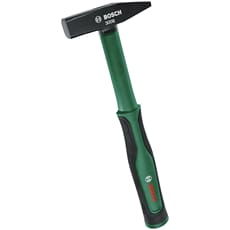
Bosch Home and Garden Hammers cover the striking jobs that come up around the home, garage and workshop. The selection is built around engineers hammers, also known as ball pein hammers. Each has a flat striking face on one side of the head and a rounded pein on the other. That makes them a better fit for metalwork, fabrication and mechanical repairs than a general-purpose claw hammer.
Tooled-Up.com stocks Bosch Home and Garden Hammers for DIYers who want a dependable hand tool for shaping, fitting and fixing. An engineers hammer suits tasks where control matters as much as force, such as tapping components into position, driving punches and cold chisels, and working metal.
Key Features of Bosch Home and Garden Hammers
Engineers hammers share a few design points, and each one affects how the tool performs on the job:
- Flat striking face: Delivers a square, controlled blow for driving punches, chisels and pins, and for tapping parts into place.
- Ball pein end: The rounded pein is made for peening, rounding over rivet heads and working metal surfaces. It is also useful in tight spots where the flat face will not fit.
- Hardened steel head: A hardened striking surface resists wear and deformation, so the face stays true with repeated use.
- Balanced head and handle: A well-balanced hammer lets the head do the work. You can strike accurately with less effort and less fatigue.
- Comfortable handle: A grip that sits well in the hand helps control and cuts down on strain during longer jobs.
Check each product listing for exact head weights, handle materials and dimensions before you buy.
Who Uses Bosch Home and Garden Hammers?
These hammers suit anyone who works with metal or mechanical parts at home or in the shed. Typical users include:
- DIY enthusiasts: Shaping brackets, fitting metal fixings and tackling general workshop repairs.
- Home mechanics: Tapping components free, aligning parts and driving pins or punches during car and bike maintenance.
- Metalworking hobbyists: Peening, riveting and light forming on small projects.
- Homeowners: Keeping a reliable striking tool for maintenance, from knocking out seized pins to using it with a cold chisel.
- Students and apprentices: Learning basic fitting and fabrication skills with a tool suited to the work.
Popular Bosch Home and Garden Hammers
The main product type here is the engineers hammer. Browse the Bosch Home and Garden selection at Tooled-Up.com to compare options. Lighter engineers hammers give better feel and precision on small components and fine work. Heavier ones deliver more force for driving chisels and punches or for larger metal shaping tasks.
When you compare models, look at head weight, handle length and grip. Then match them to the work you do most often. Pair your hammer with suitable punches or chisels from the wider hand tools range for the best results.
Frequently Asked Questions
What is an engineers hammer used for?
An engineers hammer is used for metalworking and mechanical tasks. The flat face drives punches, chisels and pins. The ball pein shapes metal and rounds over rivet heads.
How do I choose the right weight?
Choose a lighter hammer for delicate work, small fixings and long periods of use. A heavier head suits driving chisels and punches or shaping thicker metal. Pick the weight that lets you swing with control and accuracy rather than the heaviest one available.
Can I use an engineers hammer instead of a claw hammer?
Engineers hammers are not designed for pulling nails, as they have no claw. For carpentry and nail removal a claw hammer is the better tool. For metalwork and striking tools such as punches and chisels, an engineers hammer is the right choice.
How do I use and look after my hammer safely?
Always wear safety glasses when striking metal. Never strike hardened steel surfaces with a hammer head, as fragments can break off. Check the head is secure and the handle is undamaged before each use. Wipe the head after use and store it somewhere dry to prevent rust. File off any mushrooming on the striking face. HSE guidance on hand tool safety is a useful reference for workshop use.