
Expert By Facom Plumbing Tools

Loading...
End of content
Error - No more pages to load
Expert By Facom Plumbing Tools at Tooled-Up.com
Expert By Facom Plumbing Tools at Tooled-Up.com focus on the pipe cutting and preparing side of the job. These are the tools used before a joint is made, when copper and plastic pipework needs cutting to length, cleaning up and getting ready for fittings. Clean, square, burr-free pipe ends help compression and soldered joints seat properly, which cuts down on call-backs and leaks.
The selection is built around the Pipe Cutting & Preparing Tools sub-category, so it suits anyone who wants dependable, practical tools for everyday pipework rather than gimmicks. Pipe cutters, deburring tools and tube benders are the core of this kind of work, and each does a distinct job in the sequence from measuring up to making the joint.
Key Features of Expert By Facom Plumbing Tools
Pipe cutting and preparing tools are judged on how cleanly and consistently they work. These are the points to look for when comparing Expert By Facom options:
- Clean, square cuts: A cutter that leaves a straight, even end gives a better seat in compression fittings and a more even capillary gap for soldering.
- Deburring capability: Removing the burr from inside and outside a cut pipe protects olives and O-rings, and helps keep flow smooth.
- Hand-tool control: Manual tools let you feel the cut, which helps when working on finished pipework or near other fittings.
- Bending accuracy: A tube bender forms smooth bends without kinking, so you need fewer elbow fittings and fewer joints that could leak.
- Site-ready build: These are hand tools made for daily use in toolbags and vans, so they are designed to stand up to regular handling.
Specifications such as pipe capacity differ between tools, so check each product listing for the sizes it covers before ordering.
Who Uses Expert By Facom Plumbing Tools?
These tools suit anyone cutting and shaping pipe by hand:
- Plumbers: First-fix and second-fix pipework in homes and commercial premises.
- Heating engineers: Boiler swaps, radiator moves and central heating alterations that involve copper pipe.
- Maintenance technicians: Repairs and modifications to existing pipework where tidy preparation matters.
- Apprentices: Building a reliable core kit of pipe preparation tools.
- DIYers: Bathroom, kitchen and utility room installations where new supplies need running.
Popular Expert By Facom Plumbing Tools
Browse the Expert By Facom selection at Tooled-Up.com and you will find tools grouped under Pipe Cutting & Preparing Tools.
Pipe Cutters
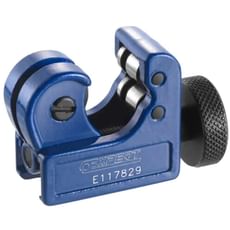
Used to cut copper and other pipe to length with a neat, square finish. They are a first-choice tool when a hacksaw would leave a ragged or angled end, and they work well in tighter spots where a saw is awkward to swing.
Deburring Tools
These follow the cutter, removing the sharp internal and external edges left after cutting. This quick step helps fittings go on smoothly and protects seals from damage.
Tube Benders
Used to form controlled bends in pipe, avoiding extra fittings and keeping pipe runs neat and tidy, which is especially useful for visible pipework.
Frequently Asked Questions
Do I need to deburr pipe after cutting it?
Yes. Even a good cutter leaves a small burr, and left in place it can damage olives, O-rings and seals or restrict flow. A deburring tool takes seconds and helps give a reliable joint.
Which Expert By Facom tool should I choose for copper pipe?
A pipe cutter gives the cleanest result for cutting to length, with a deburring tool to finish the ends. If the run needs a change of direction, a tube bender can replace some elbow fittings. Check the listing to confirm the pipe diameters each tool covers.
Can I use a pipe cutter in tight spaces?
Often, yes. A hand pipe cutter needs only a small arc of movement around the pipe, so it can work where a hacksaw cannot. Compare the dimensions on the product page against the space you have.
How should I look after pipe cutting tools?
Keep them clean and dry, wipe away swarf and flux residue after use, and store them in a toolbox or roll. Replace cutting wheels when they become dull, as worn wheels make rough cuts and need more force. Tooled-Up.com product listings give the details for each tool.