
Marples Woodworking Tools



Loading...
End of content
Error - No more pages to load
Marples Woodworking Tools at Tooled-Up.com
Tooled-Up.com stocks Marples Woodworking Tools for shaping, paring and finishing timber by hand. The selection centres on two types of tool: chisels for cutting joints and removing waste, and wood scrapers for smoothing surfaces and removing old finishes.
These are hand tools for work where control matters more than speed. A sharp chisel cuts a clean mortise or housing, and a scraper can leave a fine surface on awkward grain where sanding can tear or clog. Browse the Marples selection at Tooled-Up.com to compare the tools by type and by the job they suit.
Key Features of Marples Woodworking Tools
Chisels
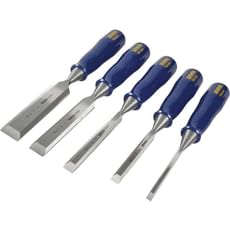
- Hardened cutting edges: a hard steel blade holds its edge through repeated paring and chopping, so you spend less time stopping to sharpen.
- Handles built for striking and pushing: a comfortable grip gives control for fine paring, while a robust handle suits mallet work on heavier joinery.
- Range of blade widths: narrow chisels reach into tight dovetails and recesses, and wider ones clear larger housings and rebates quickly.
Wood Scrapers
- Flat working edge: a scraper takes fine shavings from the surface, which helps leave a smooth finish on difficult or figured grain.
- Removing finishes: scrapers lift old paint, varnish and glue residue without the dust of power sanding.
- Simple, durable design: few parts mean little to go wrong, and the tool can be reworked when the edge dulls.
Who Uses Marples Woodworking Tools?
Carpenters and joiners use chisels daily for fitting hinges, cutting lock recesses, trimming door frames and forming joints on site. Chippies working on staircases, windows and bespoke joinery will also reach for them when a clean, accurate cut is needed.
Furniture makers and restorers use chisels for cutting joints and scrapers for preparing surfaces before finishing. Serious DIYers will find them useful for jobs such as fitting a new door, repairing timber frames or stripping a tired piece of furniture back to bare wood.
Popular Marples Woodworking Tools
The Tooled-Up Marples range is split into two main groups:
- Chisels: for joinery, general carpentry, paring and chopping. Choose the blade width to match the joint or recess you are cutting.
- Wood Scrapers: for smoothing, levelling and removing old coatings from timber surfaces.
Shop Marples Woodworking Tools at Tooled-Up.com and pick by task, whether that is cutting accurate joints or preparing a surface for finishing.
Frequently Asked Questions
Which Marples chisel should I choose for joinery?
Match the width to the joint. Narrow chisels suit fine work such as dovetails, while wider ones are better for hinge recesses, housings and general site carpentry.
When should I use a scraper instead of sandpaper?
A scraper is a good choice for removing old paint or varnish and for smoothing awkward grain, because it cuts the surface cleanly and produces shavings rather than fine dust.
How do I keep a chisel in good condition?
Keep the edge sharp with a sharpening stone or guide, avoid using it to prise or lever, and store it so the cutting edge is protected. Always cut away from your body and clamp the workpiece securely.
Can I strike a chisel with a mallet?
Only if the handle is designed for it. Use a mallet rather than a hammer, and use lighter pushing and paring cuts for fine work.