
Strait Line Marking Tools

Loading...
End of content
Error - No more pages to load
Strait Line Marking Tools at Tooled-Up.com
Accurate marking out is the starting point for any job that needs to be straight, level or square. Tooled-Up.com stocks Strait Line Marking Tools across three product types: carpenters pencils, crayons, and lines and pins. Each is designed for a different surface and a different marking task, from a fine pencil line on timber to a bold, visible mark on rough masonry.
Together they cover the core marking jobs on site and in the workshop. Pencils and crayons record measurements and cut lines directly on the material, while lines and pins let you set out long, straight references across floors, walls, foundations and garden plots.
Key Features of Strait Line Marking Tools
- Flat carpenters pencil profile: the oblong body will not roll off a bench or roof, and the wide lead can be sharpened to a chisel edge for fine lines or left blunt for bold ones.
- Hard-wearing leads: designed to resist snapping in a pocket or tool pouch, so you spend less time re-sharpening.
- Crayons for tougher surfaces: the waxy marking medium shows up on rough, dusty or damp materials where pencil can disappear.
- Lines and pins: a taut line between two pins gives a long, straight reference, which is useful for bricklaying courses, paving falls and fence runs.
- Simple, portable design: light enough to carry in a pocket or apron, quick to set up and easy to replace.
Who Uses Strait Line Marking Tools?
Carpenters, joiners and chippies rely on carpenters pencils for marking cut lines, joints and positions on timber and sheet materials. Bricklayers and general builders use lines and pins to keep courses level and walls true over long runs. Landscapers and groundworkers use them for setting out patios, paths, edging and fence lines.
Crayons suit plasterers, tilers, roofers and anyone marking on stone, concrete, slate or other rough surfaces. DIY enthusiasts will also find them handy for shelving, decking and fitted furniture projects where neat marking makes the difference between a good finish and a poor one.
Popular Strait Line Marking Tools
Carpenters Pencils
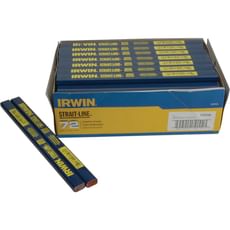
The everyday choice for woodworking and first-fix carpentry. Flat bodies and robust leads make them easy to sharpen with a knife and simple to keep in a tool pouch.
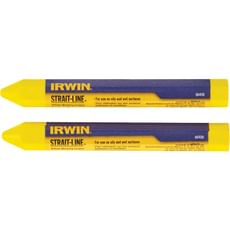
Crayons
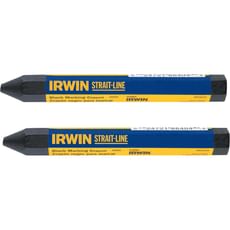
Ideal when pencil will not show. Use them to mark brick, block, concrete, stone and other tough or uneven surfaces.
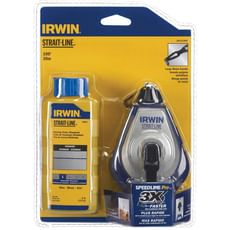
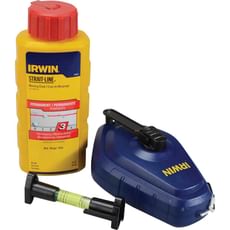
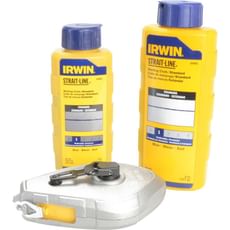
Lines & Pins
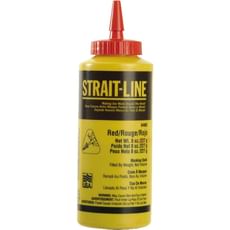
Essential for setting out straight lines over distance. Shop Strait Line Marking Tools at Tooled-Up.com to pair lines with pins for brickwork, paving and groundwork.
Frequently Asked Questions
What is a carpenters pencil used for?
It is used to mark timber, boards and other materials for cutting and fitting. The flat shape stops it rolling away and gives either a thick or fine line depending on how you sharpen it.
When should I use a crayon instead of a pencil?
Choose a crayon on rough, dusty, damp or dark surfaces such as brick, concrete, stone or slate, where pencil marks are hard to see.
What are lines and pins used for?
They create a straight guide between two fixed points. Builders use them to keep brick courses level, while landscapers use them to set out paths, patios and edges.
How do I keep a line straight over a long distance?
Fix the pins firmly at each end and pull the line taut so it does not sag. Check it against a level or tape measure before you start work.