
Notched Trowels

Pay in 3 interest-free payments on purchases from £20-£3000 with  . Learn more.
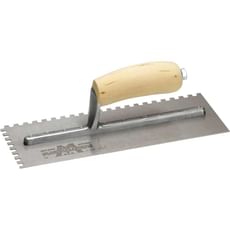
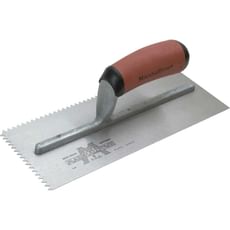
Loading...
End of content
Error - No more pages to load
About Notched Trowels
Notched trowels are specialist plastering and tiling tools designed to apply and spread adhesive, bonding agents, and textured coatings in a consistent, ridged pattern. Unlike standard flat trowels, the serrated or notched edge creates uniform grooves in the material being spread, which helps achieve strong adhesion and even coverage — particularly important when fixing tiles, applying render, or working with flexible bonding compounds. The notch profile helps trap air and ensures materials bond correctly to the substrate.
Tooled-Up.com stocks notched trowels from Marshalltown, one of the most trusted names in professional plastering and tiling tools. Marshalltown's notched serrated plasterers trowels are engineered to the same exacting standards as their regular plastering range, featuring cross-ground blades that retain their shape under demanding site conditions, and fully heat-treated alloy mountings for long-lasting strength. Whether you're applying bonding plaster, spreading tile adhesive, or creating textured finishes, a quality notched trowel is an essential tool in the kit.
Available in a range of notch sizes and blade dimensions, notched trowels are suitable for everything from fine texture work to heavy-duty adhesive spreading on large-format tiles. Choosing the correct notch size is critical to achieving the right bed depth and ensuring a solid, long-lasting finish.
Jargon Buster
- Notch Size: Refers to the depth and spacing of the serrations on the trowel edge, typically measured in millimetres. Larger notches create deeper ridges and are used for thicker adhesive beds or large-format tiles.
- V-Notch: A V-shaped serration profile that creates pointed ridges in adhesive, commonly used for wall tiling and thinner materials.
- Square-Notch: A square-edged profile that lays more adhesive than a V-notch, preferred for floor tiling and large or heavy tiles requiring a thicker bed.
- Cross-Ground Blade: A manufacturing process where the blade is ground across its face to create a flat, true surface that maintains its shape even with repeated heavy use.
- Bonding Agent: A preparatory coating applied to a substrate to improve adhesion before plastering, rendering, or tiling. Often applied with a notched trowel to ensure even coverage.
- Substrate: The base surface onto which plaster, render, adhesive, or tile is being applied — for example, concrete, plasterboard, or brick.
Who Uses Notched Trowels?
- Plasterers — for applying bonding coats, textured finishes, and preparatory layers with consistent depth across walls and ceilings.
- Tilers — for spreading tile adhesive with the correct bed depth to suit different tile sizes and formats.
- Renderers — for applying external render systems that require a keyed surface to accept the next coat.
- General builders and groundworkers — for laying floor screeds, adhesive membranes, and levelling compounds.
- DIY enthusiasts — tackling tiling projects in kitchens, bathrooms, or conservatories who need consistent adhesive coverage.
- Flooring contractors — applying flexible adhesive for vinyl, LVT, or natural stone floor coverings.
How to Choose the Right Notched Trowel
Selecting the correct notched trowel depends on several key factors:
- Notch profile: V-notch trowels suit wall tiles and lighter materials; square-notch trowels are better for floor tiles and large-format or heavy tiles that need a fuller adhesive bed.
- Notch size: The adhesive manufacturer's guidelines will typically specify the notch size required — commonly ranging from 3mm up to 12mm or more. Always match the notch to the adhesive and tile size.
- Blade size: Larger blades cover more area quickly, making them ideal for big tiling jobs or render work. Smaller blades offer greater manoeuvrability in tight spaces.
- Blade material: Look for high-carbon or stainless steel blades for durability and resistance to corrosion, especially when working with wet cement-based adhesives.
- Handle comfort: On long jobs, an ergonomic, well-balanced handle reduces fatigue. Marshalltown trowels are well regarded for their comfortable, professional-grade handles.
Popular Accessories
- Flat finishing trowels and gauging trowels for smoothing and detailing work
- Tile spacers and levelling systems for accurate tile alignment
- Tile adhesive and flexible bonding compounds
- Grout and grout floats for finishing tiled surfaces
- Plasterers' hawks for holding material while working
- Mixing paddles and buckets for preparing adhesive and render
- Knee pads and workwear (Snickers, Scruffs) for floor tiling comfort and protection
Safety Information
When working with tile adhesives, bonding agents, or render, always check the product's COSHH data sheet and follow the manufacturer's guidance. Cement-based products are alkaline and can cause skin irritation or burns with prolonged contact — wear appropriate gloves and wash hands thoroughly after use. If mixing dry adhesive or render powders, consider wearing a dust mask rated to FFP2 or higher to avoid inhaling fine particles. Work in a well-ventilated area where possible, and dispose of waste material responsibly in line with HSE guidelines.
Frequently Asked Questions
What is a notched trowel used for?
A notched trowel is used to spread tile adhesive, bonding agents, or textured coatings in a consistent, ridged pattern. The grooves created by the notched edge help materials bond firmly to the substrate and ensure even coverage across the surface.
What size notched trowel do I need for floor tiles?
For standard floor tiles (up to around 300x300mm), a 6mm square-notch trowel is commonly recommended. For larger format tiles (600x600mm or above), a 10mm or 12mm notch is typically required to ensure a sufficient adhesive bed. Always check the adhesive manufacturer's specifications.
What's the difference between a V-notch and a square-notch trowel?
A V-notch trowel creates pointed, triangular ridges and deposits less adhesive, making it suitable for wall tiles and thinner materials. A square-notch trowel creates flat-topped ridges and lays a fuller bed of adhesive, which is better suited to floor tiles, heavy tiles, and large-format formats.
Are Marshalltown notched trowels suitable for professional use?
Yes — Marshalltown is a globally respected brand among professional plasterers and tilers. Their notched serrated trowels feature cross-ground blades and heat-treated alloy mountings, designed to maintain performance through heavy, repetitive site use. Browse the selection available from Tooled-Up to find the right Marshalltown trowel for your trade.