

Taps & Dies

Pay in 3 interest-free payments on purchases from £20-£3000 with  . Learn more.
 Loading...
End of content
Error - No more pages to load
About Taps & Dies
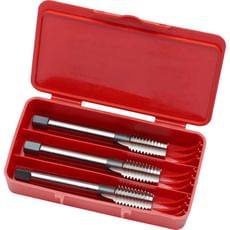
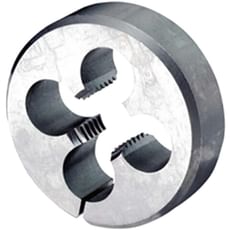
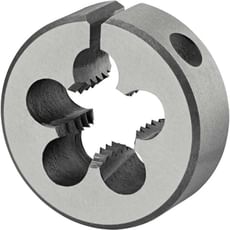
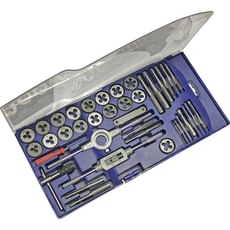
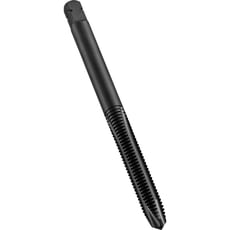
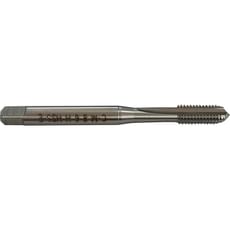
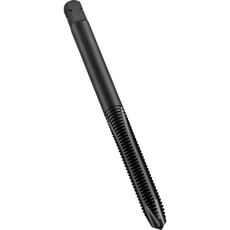
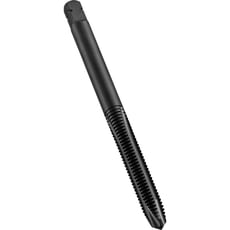
Taps and dies are essential threading tools used to create or restore internal and external threads on a wide range of materials including steel, aluminium, brass, and plastic. A tap cuts internal threads inside holes to accept bolts and screws, whilst a die creates external threads on rods, pipes, and bolts. These precision cutting tools are indispensable for fabrication, maintenance, and repair work across engineering, automotive, plumbing, and general metalworking applications.
The range available from Tooled-Up.com encompasses everything needed for professional threading work, from individual taps and dies through to comprehensive tap and die sets containing multiple sizes and thread types. Quality threading tools from trusted brands like Irwin, Bahco, and Stanley deliver clean, accurate threads that ensure strong, reliable fastening connections. Whether you're retapping damaged threads, creating new threaded connections, or manufacturing custom components, having the correct taps and dies is fundamental to achieving professional results.
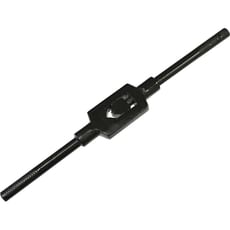
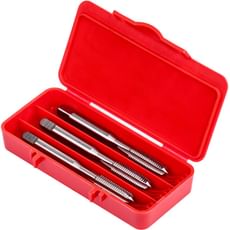
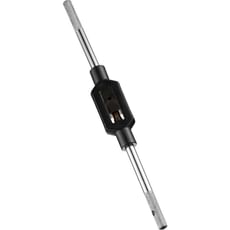
Threading tools are typically manufactured from high-speed steel (HSS) or carbon steel, with specialist options including cobalt steel and titanium-coated variants for enhanced durability when working with harder materials. Sets often include taper, second, and plug taps for different stages of thread cutting, along with the corresponding die stocks and tap wrenches required to hold and turn these cutting tools with precision and control.
Jargon Buster
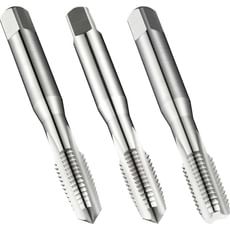
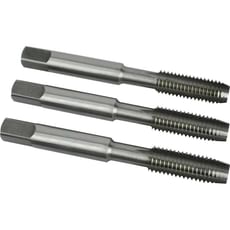
- Taper Tap: Features a gradual taper on the cutting end with approximately 8-10 threads tapered. Used as the first tap in a sequence for easier starting and less aggressive cutting, particularly useful in through-holes.
- Plug Tap: Also called a second tap, this has a taper of about 3-5 threads and is used for general-purpose tapping. Often the only tap needed for through-holes and the second tap used when threading blind holes.
- Bottoming Tap: Has minimal taper (1-2 threads) allowing threads to be cut close to the bottom of blind holes. Used as the final tap in a sequence after taper and plug taps have done the initial cutting.
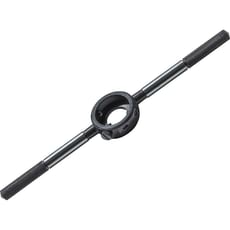
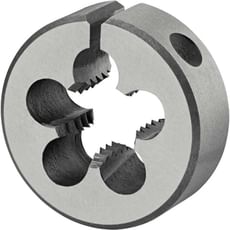
- Die Stock: The handle or holder used to grip and turn circular dies when cutting external threads. Available in various sizes to accommodate different die diameters.
- Thread Pitch: The distance between adjacent thread peaks, typically measured in threads per inch (TPI) or as a metric pitch in millimetres. Common standards include BSW, BSF, UNC, UNF, and metric pitches.
- HSS (High-Speed Steel): A tool steel alloy containing tungsten, molybdenum, chromium, and vanadium that maintains hardness at high temperatures, making it ideal for cutting tools including taps and dies.
Who Uses Taps & Dies?
Taps and dies are essential tools for numerous trades and applications:
- Engineers and Fabricators: Creating threaded components and assemblies in workshops and manufacturing environments
- Motor Mechanics and Auto Engineers: Repairing damaged threads on engine blocks, gearboxes, and chassis components
- Plumbers and Heating Engineers: Threading pipe work and repairing threads on fittings and valves
- Maintenance Engineers: Restoring damaged threads on machinery, plant equipment, and industrial installations
- Agricultural Engineers: Repairing and maintaining farm machinery and equipment in field and workshop settings
- Model Engineers and Hobbyists: Creating precision threaded components for model engineering and restoration projects
- General Metalworkers: Fabricating custom brackets, frames, and metal assemblies requiring threaded connections
- Carpenters and Joiners: Using wood taps for threading hardwoods and creating threaded inserts
- DIY Enthusiasts: Home repairs, restorations, and projects requiring thread cutting or repair
How to Choose the Right Taps & Dies
Selecting appropriate threading tools depends on several key factors:
Thread Standards: Identify whether you need metric, BSW (British Standard Whitworth), BSF (British Standard Fine), UNC (Unified National Coarse), or UNF (Unified National Fine) threads. Tooled-Up stocks comprehensive sets covering all common standards plus individual taps and dies for specific requirements.
Material Compatibility: Standard HSS taps and dies suit most applications in steel, aluminium, and softer metals. For harder materials like stainless steel, consider cobalt steel or titanium-coated options offering improved wear resistance and heat tolerance. Specific taps are available for cast iron, plastics, and wood.
Through-Hole or Blind Hole: Through-holes where the tap passes completely through typically require only a plug tap. Blind holes (those with a closed bottom) need a sequence of taper, plug, and bottoming taps to achieve full thread depth right to the bottom of the hole.
Set or Individual Tools: Comprehensive tap and die sets provide excellent value for tradespeople and workshops requiring versatility across multiple thread sizes and types. Those with specific, regular requirements may prefer purchasing individual taps and dies in the exact sizes needed, supplemented by quality tap wrenches and die stocks.
Build Quality: Precision-ground threading tools from established manufacturers deliver superior thread quality, longer tool life, and better resistance to breakage. Cheap taps frequently snap in holes, creating difficult and costly removal challenges, whilst poor-quality dies produce loose, weak threads.
Popular Accessories
- Cutting Fluid and Tapping Compound: Essential lubricants reducing friction, improving thread quality, and extending tap life
- Tap Extractors: Specialist tools for removing broken taps from holes without damaging the parent material
- Screw Extractors: For removing broken bolts and studs before retapping damaged threads
- Thread Gauges: Precision measuring tools for identifying thread pitch and verifying thread accuracy
- Drill Bit Sets: Specific pilot hole sizes are critical for successful tapping—dedicated tapping drill sets ensure correct hole sizing
- Centre Punches and Drifts: For accurately marking hole positions before drilling
- Thread Repair Kits: Helicoil and thread insert systems for repairing stripped or oversized threads
- Deburring Tools: Removing sharp edges from drilled holes before tapping
- Engineers' Squares and Rules: Ensuring taps are started square to the work surface for straight, accurate threads
Safety Information
Threading operations require attention to safety considerations:
Eye Protection: Always wear safety glasses or goggles when tapping or threading. Metal chips can be ejected during the cutting process, particularly when clearing swarf from the tap flutes or when taps break under load.
Secure Workholding: Never hold work by hand when tapping or threading. Use a vice, clamps, or other secure workholding methods to prevent the workpiece rotating or moving, which can cause tool breakage, injury, or spoiled threads.
Correct Technique: Apply steady, even pressure and use the correct forward-and-reverse technique (typically one turn forward, half turn back) to break and clear chips. Forcing a tap or die causes breakage and potential injury. If resistance increases significantly, back out the tool, clear swarf, and apply fresh cutting fluid before continuing.
Sharp Edges: Freshly cut threads and metal swarf are extremely sharp. Wear appropriate gloves when handling threaded components and clearing chips from the work area. Deburr threads and holes after cutting to remove sharp edges.
Frequently Asked Questions
What size drill bit do I need before tapping?
Each tap size requires a specific pilot hole diameter—too small and the tap will bind or break, too large and the threads will be weak. Tapping drill charts are widely available showing the correct drill size for each thread size and pitch. Many tap and die sets include these reference charts, and comprehensive tapping drill bit sets matched to common thread sizes are available at Tooled-Up.com.
Why do taps come in sets of three (taper, second, and plug)?
Using a sequence of taps distributes the cutting work across multiple tools, reducing the load on each and minimising breakage risk, particularly in blind holes or harder materials. The taper tap starts the thread easily, the plug tap (second tap) does most of the cutting work, and the bottoming tap finishes threads close to the bottom of blind holes. For through-holes in softer materials, a plug tap alone often suffices.
Can I sharpen or recondition worn taps and dies?
Whilst technically possible, sharpening taps and dies requires specialist grinding equipment and expertise to maintain critical angles and dimensions. For most users, replacing worn threading tools is more practical and economical than attempting reconditioning. However, premium large-diameter taps and dies may justify professional resharpening services.
What's the difference between hand taps and machine taps?
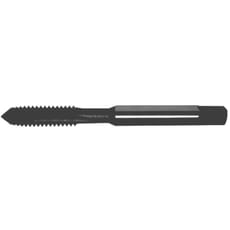
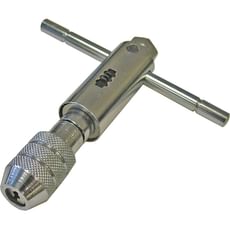
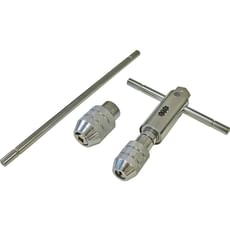
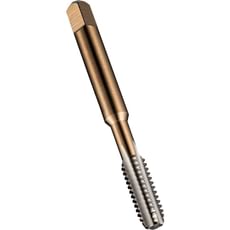
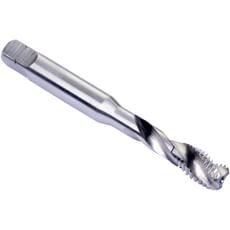
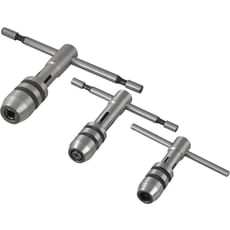
Hand taps feature a square drive end for use with tap wrenches and are designed for manual operation with lower cutting speeds. Machine taps (spiral point or spiral flute types) are designed for power drilling machines and machining centres, with different flute geometries optimised for mechanical operation, chip evacuation, and higher cutting speeds. The taps and tap wrenches in this category are designed for hand operation.
How do I remove a broken tap from a hole?
Broken taps are notoriously difficult to remove because the hardened steel resists drilling. Options include using a dedicated tap extractor tool that grips the tap's flutes, carefully using EDM (electrical discharge machining) to erode the tap, or drilling out with carbide drills followed by retapping to a larger size with a thread repair insert. Prevention through proper technique, appropriate cutting fluid, and quality tools is always preferable to extraction attempts.