
Bosch Professional Sanding & Wire Wool

Loading...
End of content
Error - No more pages to load
Bosch Professional Sanding & Wire Wool at Tooled-Up.com
Bosch Professional Sanding & Wire Wool covers the abrasives used to shape, smooth and prepare surfaces before coating or finishing. Tooled-Up.com stocks the selection by abrasive type and format, so you can choose between aluminium oxide sandpaper, silicon carbide sandpaper, general sandpaper, sanding blocks and sanding rolls.
The right abrasive depends on the material, the finish you need and whether you are working by hand or with a sander. Each type in the Bosch Professional selection suits a particular stage of the job, from levelling rough timber to flatting paint between coats.
Key Features of Bosch Professional Sanding & Wire Wool
The main difference between the products is the abrasive grain and the format.
- Aluminium oxide grain: a tough, hard-wearing abrasive for general sanding of timber, painted surfaces and many metals. It suits everyday site work where durability matters.
- Silicon carbide grain: a sharper abrasive that cuts cleanly on paint, lacquer, plastics and non-ferrous metals. It gives a fine, even scratch pattern for finishing and inter-coat work.
- Graded grits: coarse grits remove material quickly, medium grits smooth and blend, and fine grits prepare surfaces for paint, stain or varnish.
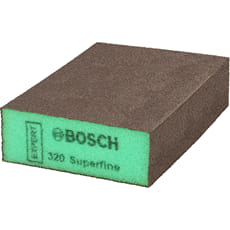
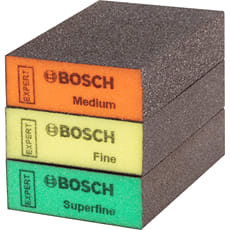
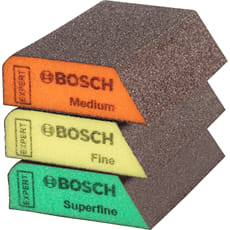
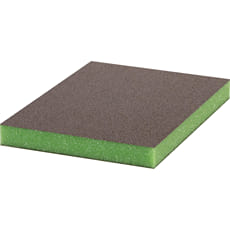
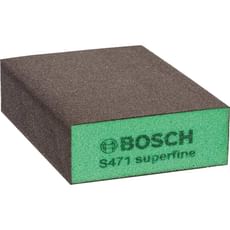
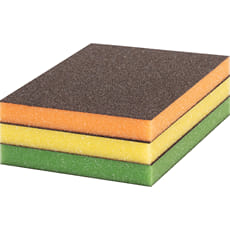
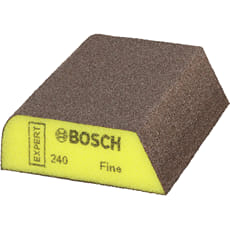
- Sanding blocks: these hold the abrasive flat and spread pressure evenly, which helps on edges, flat faces and hand-finishing jobs.
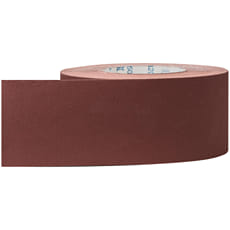
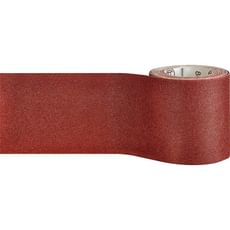
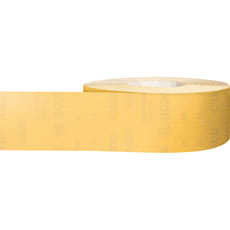
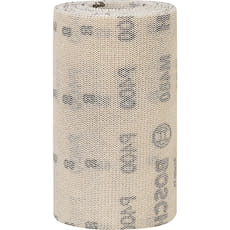
- Sanding rolls: you can cut these to the length you need, which suits hand sanding, profiles and awkward shapes with less waste.
Who Uses Bosch Professional Sanding & Wire Wool?
These abrasives suit anyone who needs a dependable surface finish:
- Carpenters and joiners – smoothing timber and preparing joinery before finishing
- Decorators and painters – keying existing paintwork and flatting between coats
- Furniture makers and restorers – fine finishing on visible surfaces
- Metal fabricators – removing burrs and preparing metalwork for coating
- Vehicle body and refinishing technicians – feathering and preparing surfaces for paint
- Maintenance teams and DIY users – general repairs, refurbishment and home improvement projects
Popular Bosch Professional Sanding & Wire Wool
Aluminium Oxide Sandpaper
A reliable all-rounder for wood, paint and general preparation. Choose it when you want long life and consistent cutting across mixed materials.
Silicon Carbide Sandpaper
Best for fine finishing, paint and lacquer work, and harder or smoother materials where a sharp, clean cut gives a better result.
Sandpaper
The wider sandpaper selection lets you match grit and format to the task, from rough preparation to final smoothing.
Sanding Blocks
Sanding blocks give a firm, flat backing for hand sanding. They are useful for keeping faces level and for working comfortably through longer jobs.
Sanding Rolls
Rolls are practical for tradespeople who want to cut abrasive to size for hand work, mouldings and curved details.
Browse the full Bosch Professional selection at Tooled-Up.com to compare grits and formats.
Frequently Asked Questions
Should I choose aluminium oxide or silicon carbide sandpaper?
Aluminium oxide is the better general-purpose choice for timber, paintwork and many metals because it is tough and long-lasting. Silicon carbide is sharper and suits finer finishing, such as flatting paint or lacquer and sanding plastics, where a smooth, even scratch pattern matters.
What grit should I start with?
Use coarse grits of around 40–80 for heavy stock removal and rough timber. Move to 100–120 for general smoothing, then 150–180 before finishing. Finer grits of 220 and above suit inter-coat flatting and final finishing. Work through the grits in order rather than skipping several stages.
When is a sanding block better than sanding by hand?
A sanding block keeps the abrasive flat and spreads pressure evenly. This helps you avoid finger marks and dips on flat surfaces and edges. For curves and profiles, a cut length of sanding roll can follow the shape more easily.
How do I make sandpaper last longer?
Choose the right grit for the job, avoid pressing too hard and clear dust regularly so the surface does not clog. Fold or reposition the abrasive as it wears. Always wear suitable RPE and use dust extraction where possible, in line with HSE and COSHH guidance.