

Morticers

Pay in 3 interest-free payments on purchases from £20-£3000 with  . Learn more.


 Loading...
End of content
Error - No more pages to load
About Morticers
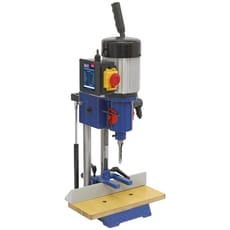
Morticers, also known as morticing machines or hollow chisel mortisers, are specialist woodworking machines designed to cut square or rectangular mortise holes in timber with precision and efficiency. These robust bench-mounted tools combine a drilling action with a square hollow chisel to create clean, accurate mortises – an essential joint-making operation that would otherwise require considerable time and effort using traditional hand chisels and mallets. Whether you're producing mortise and tenon joints for furniture making, door construction, or general joinery work, a dedicated morticer delivers consistent, professional results that are difficult to achieve by hand.
Modern bench morticers feature powerful induction motors, adjustable depth stops, and fence systems that allow for repeatable accuracy across multiple workpieces. Available in various sizes – typically categorised by their maximum chisel capacity such as 1/2" or 1" – these machines cater to different scales of work from fine furniture components to structural timber joinery. The hollow chisel mortiser works by using an auger bit that rotates inside a stationary square chisel, simultaneously drilling and squaring the mortise in a single operation, making it significantly faster and more accurate than alternative methods.
Tooled-Up.com stocks a selection of bench morticers from trusted manufacturers including Draper and Sealey, offering both compact 1/2" machines ideal for smaller workshops and more substantial 1" capacity models for heavier-duty applications. Many professional models come complete with stands for comfortable working height, whilst others are designed for secure bench mounting in established workshop environments. These machines typically operate on standard 240v UK mains power and include essential accessories such as chisel sets, work clamps, and adjustable fences to get you started immediately.
Jargon Buster
- Hollow Chisel: A square-section steel tube with a sharp cutting edge that surrounds the auger bit, creating the square mortise hole. The chisel remains stationary while the internal bit removes the waste material, with the chisel's edges squaring and finishing the cut.
- Mortise Capacity: The maximum chisel size the machine can accommodate, typically expressed in imperial measurements (1/4", 3/8", 1/2", 5/8", 3/4", 1"). This determines the largest mortise width you can cut and generally indicates the machine's overall power and capability.
- Auger Bit: The specialised drill bit that rotates inside the hollow chisel, designed with a square profile to fit within the chisel and featuring cutting edges that remove the bulk of the waste material before the chisel squares the hole. Must be matched correctly to the chisel size.
- Depth Stop: An adjustable mechanical stop that controls how deep the chisel penetrates into the workpiece, ensuring consistent mortise depth across multiple pieces and preventing over-cutting. Essential for production work and batch processing.
- Fence System: The adjustable guide that positions the workpiece relative to the chisel, allowing precise placement of the mortise and enabling repeatable positioning for multiple identical cuts. Quality fences include fine adjustment mechanisms and measuring scales.
- Induction Motor: A robust, low-maintenance motor type commonly used in bench morticers, providing reliable power output and good durability for workshop use. Typically rated between 370W and 720W depending on machine capacity.
Who Uses Morticers?
Morticers are essential equipment for various woodworking professionals and serious enthusiasts:
- Joiners and Carpenters: Creating traditional mortise and tenon joints for doors, windows, staircases, and structural timber work in both workshop and site environments.
- Cabinet Makers: Producing precise joints for furniture construction, particularly for frames, carcasses, and high-quality bespoke pieces requiring traditional joinery methods.
- Furniture Manufacturers: Both small workshops and larger production facilities requiring consistent, repeatable mortises in chair rails, table aprons, bed frames, and other furniture components.
- Shopfitters: Creating strong joinery for retail fixtures, display units, and commercial interior woodwork where traditional joints provide superior strength and aesthetics.
- Restoration Specialists: Replicating traditional joinery methods when repairing or restoring antique furniture and period properties where authentic techniques are required.
- Educational Institutions: Schools, colleges, and training centres teaching traditional woodworking skills, joinery techniques, and furniture-making courses.
- Serious DIY Woodworkers: Home workshop enthusiasts undertaking furniture projects, timber-frame structures, garden furniture, or traditional joinery requiring professional-quality results.
- Timber Frame Builders: Creating joints in oak framing and other structural timber projects, particularly for traditional building methods and heritage construction.
How to Choose the Right Morticer
Chisel Capacity: This is your primary consideration. A 1/2" (12.7mm) morticer suits lighter furniture work, cabinet making, and smaller joints, whilst a 1" (25mm) machine handles heavier structural work, door construction, and larger timber sections. Consider the typical size of joints you'll be cutting – it's better to have capacity you occasionally need than to be limited by a machine that's too small. Many 1/2" models accept chisels down to 1/4", offering versatility for fine work.
Motor Power: More powerful induction motors (typically 370W to 720W) cope better with hardwoods and continuous use. If you're working predominantly with hardwoods like oak, ash, or maple, or need to cut deep mortises, invest in a more powerful machine. Lighter-duty motors suffice for softwoods and occasional use but may struggle or overheat with demanding applications. The selection at Tooled-Up includes models suited to both light-duty and professional workshop environments.
Build Quality and Stability: Cast iron construction provides superior stability and vibration dampening compared to pressed steel alternatives. A stable, heavy machine produces cleaner cuts and lasts longer under regular use. Check for solid fence systems, smooth rack-and-pinion height adjustment, and robust lever mechanisms – these details separate professional-grade machines from budget alternatives. Quality construction also ensures accurate alignment between chisel and workpiece over years of service.
Stand or Bench Mount: Decide whether you need a floor-standing model with integrated stand or a bench-mounted version. Stands offer flexibility in workshop layout and comfortable working height, whilst bench-mounted units save floor space in compact workshops. Some models are available either way, offering versatility depending on your workshop configuration and preferences.
Adjustability and Precision: Look for fine-adjustment capabilities on both the fence and depth stop. Clear measurement scales aid accuracy, whilst quick-release mechanisms speed up setup between different workpieces. The quality of the work clamp is also important – it must hold timber securely without excessive tightening effort. Consider models with multiple clamping positions for versatility with different workpiece sizes.
Included Accessories: Some machines come with starter sets of hollow chisels and auger bits (commonly 1/4", 3/8", 1/2"), chuck keys, and adaptor bushings, whilst others require separate purchase. Factor these costs into your budget if they're not included. Having multiple chisel sizes from the outset increases the machine's immediate usefulness across different projects.
Popular Accessories
- Hollow Chisel Sets: Additional chisels in various sizes expand your machine's capability. Invest in quality chisels from reputable manufacturers for cleaner cuts and longer life between sharpenings. Common sizes include 1/4", 3/8", 1/2", 5/8", 3/4", and 1".
- Auger Bits: Matched drill bits for your hollow chisels. Keep spares on hand as these cutting edges wear faster than the chisels themselves, particularly when working with hardwoods or abrasive timbers. High-speed steel (HSS) bits offer better durability.
- Chisel Sharpening Tools: Specialised files, stones, and honing guides designed for mortice chisels. Regular sharpening maintains cutting performance and reduces motor strain, essential for clean results and extended tooling life.
- Dust Extraction Adaptors: Connect your workshop vacuum or dust extractor to minimise airborne dust and keep the work area visible. Essential for prolonged use, workshop cleanliness, and compliance with HSE guidance on wood dust exposure.
- Hold-Down Clamps: Additional clamping accessories improve workpiece security, particularly important when morticing narrow stock or working near the end of timber sections where standard clamps may not reach effectively.
- Mortise Marking Gauges: Precision marking tools for accurate mortise layout before cutting, ensuring proper joint alignment and fitment. Traditional mortise gauges with twin pins allow simultaneous marking of both mortise edges.
- Machine Covers: Protect your investment from workshop dust and moisture when not in use, particularly important in unheated workshops where condensation could cause rust on cast iron surfaces and moving parts.
- Chuck Keys: Keep spare chuck keys available as these small but essential items are easily misplaced. Some woodworkers attach a retractable key holder to the machine for convenience.
Safety Information
Morticers are powerful machines that demand respect and proper safety procedures:
Personal Protective Equipment: Always wear safety glasses or a face shield to protect against flying chips and timber debris, which can be ejected with considerable force. Hearing protection is advisable during extended use as morticing can be noisy. Avoid loose clothing, jewellery, and tie back long hair that could become entangled in rotating components. Close-fitting gloves may be worn for handling rough timber but must never be worn when the machine is operating.
Machine Setup and Maintenance: Ensure the morticer is securely mounted or positioned on a stable surface before use. Check that all guards and safety features are in place and functioning correctly. Always disconnect from the 240v mains supply before changing chisels, bits, or making adjustments. Regularly inspect chisels and bits for damage, sharpness, and secure mounting – dull tooling increases motor load and the risk of kickback or workpiece movement.
Safe Operation: Always secure the workpiece firmly using the machine's clamps before starting the motor – never attempt to hold timber by hand during cutting. Allow the motor to reach full speed before lowering the chisel into the workpiece, and withdraw the chisel completely before switching off. Make multiple shallow passes when cutting deep mortises rather than forcing the chisel through in one operation, which reduces motor strain, prevents overheating, and produces cleaner results. Typical pass depth should be 10-15mm in hardwoods, slightly more in softwoods.
Workshop Environment: Maintain adequate lighting around the machine and ensure clear access on all sides. Keep the work area clean and free from offcuts that could cause trips or interfere with workpiece positioning. Connect to appropriate dust extraction where possible, both for visibility and to comply with HSE guidance on workplace exposure limits for wood dust – a known respiratory irritant and carcinogen with prolonged exposure. Never leave the machine running unattended, and ensure it's switched off and isolated when leaving the workshop.
Frequently Asked Questions
What's the difference between a mortiser and a router for cutting mortises?
Whilst routers can cut mortises using jigs or templates, dedicated morticers produce true square-cornered mortises in a single operation without requiring elaborate setups. Routers create round-ended slots that need corner-chiselling or require rounded tenons. Morticers are faster, more accurate for production work, and produce traditional square mortises ideal for visible joinery and structural applications where joint aesthetics matter.
Can I use a morticer for cutting slots and grooves?
Morticers are specifically designed for cutting enclosed mortise holes and aren't suitable for through-slots or edge grooves. The hollow chisel requires entry into solid material and can't safely cut along an edge. For slots, grooves, and housing joints, use a router, table saw with dado blade, or spindle moulder instead.
How deep can a bench morticer cut?
Maximum depth varies by model but typically ranges from 75mm to 150mm on bench machines. However, practical cutting depth depends on chisel length and workpiece thickness. Most mortises for furniture and joinery work are between 40mm and 80mm deep. For deeper mortises, you may need to cut from both faces of the workpiece or consider larger industrial morticing machines.
Do I need different chisels for hardwood and softwood?
The same chisels work for both, but hardwoods require sharper tooling and more frequent sharpening. High-speed steel (HSS) chisels maintain their edge longer than standard carbon steel when working with hardwoods like oak or maple. Take shallower cuts in dense hardwoods to reduce motor strain and chisel wear, typically 10-15mm depth per pass rather than attempting full-depth cuts.
Why does my morticer produce rough or burnt mortises?
This usually indicates dull tooling. The hollow chisel or auger bit (or both) need sharpening when you see burning, rough walls, or require excessive force. Check that the auger bit protrudes slightly beyond the chisel – typically 1-2mm – and rotates freely without binding. Also ensure you're making appropriately shallow passes; forcing deep cuts overheats both motor and tooling, causing burning, poor finish, and reduced tool life.